Bibigo Naturally Fermented Whole Cabbage Kimchi - Poggi Kimchi 500g (Refrigerated)

Best Before
Only 35 left
OUT OF STOCK
Restock soon! PREORDER NOW
Hurry! LET BUY NOW

Only 35 left

€8.90
€7.50
- 16%

Frequently bought together

Customers also bought

Title

Bibigo Pogi Kimchi 500g · Refrigerated

Authentic Korean Fermented Food · Naturally Fermented Cabbage

Pogi Kimchi is Korea's most beloved traditional fermented food. Whole napa cabbage heads are salted leaf by leaf with sea salt, then coated generously with a seasoning paste made from gochugaru (Korean red pepper flakes), garlic, ginger, and fermented fish sauce — and left to naturally ferment. Just as cheese and wine deepen in complexity over time, Kimchi develops a fresh crunch alongside rich umami through the fermentation process. A staple on the Korean table at virtually every meal, Bibigo crafts this Kimchi following authentic traditional Korean recipes and ships it fresh to Europe.

Fermented Fermented
Dairy-Free Dairy-Free
Alcohol-Free Alcohol-Free
Korea Korea
At a Glance · Highlights
Fermentation
Naturally Fermented Naturally Fermented
Dairy-Free
No dairy ingredients Sin Lactosa · Dairy-Free
Alcohol-Free
Contains no alcohol Sin Alcohol · Alcohol-Free
Low-Fat
Low-fat food Bajo en Grasa · Low-Fat
Origin
Imported directly from Korea Direct from Korea

Product Information

Nutrition Facts (EU Regulation 1169/2011)
Nutrient Per 100g Total (500g)
Energy 125 kJ / 30 kcal 625 kJ / 150 kcal
Fat 0.4 g 2 g
- Saturated Fat Not reported
Carbohydrate 6 g 30 g
- Sugars 0.4 g 2 g
Protein 2 g 10 g
Salt 2 g 10 g

※ Values shown are reference figures based on data from the same Bibigo napa cabbage Kimchi product line. The actual packaging label takes precedence. Saturated fat has not been separately reported in manufacturer data.

Ingredients · Ingredientes

Salted napa cabbage (sea salt), gochugaru (red pepper powder), anchovy fish sauce, yellow corvina fish sauce, hairtail fish sauce, shad fish sauce, croaker fish sauce, kimchi seasoning paste, green onion, onion, vegetables, ginger, lactic acid bacteria culture, sand lance fish sauce, Korean pear puree.

※ Anchovy, yellow corvina, hairtail, shad, croaker, and sand lance are all small sea fish used to make traditional Korean fermented fish sauce (aekjeot), a key ingredient in authentic Korean Kimchi seasoning. Korean pear puree is a natural sweetener made from blended Korean pear (bae), which develops a deep, rounded flavour during fermentation.

⚠️ Allergy Information · Información sobre alérgenos (EU 1169/2011)
Crustaceans Fish Soybeans

The allergens listed above are present in this product. They originate from fermented shrimp paste, various fish sauces (fish), and the seasoning paste base.

Flavour Profile · Tasting Profile

Tasting Notes
Umami
9/10
Freshness
7.5/10
Spice
6/10
Fermented
8/10
Saltiness
6.5/10

Right after opening, the fresh crunch is most prominent. As fermentation continues during refrigerated storage, the sourness and umami deepen gradually — much like wine evolving as it ages.

Traditional Korean Fermentation · Traditional Korean Fermentation

Pogi Kimchi is a traditional fermented food that has been part of Korean culture for hundreds of years. Whole napa cabbage heads are halved and salted with sea salt to draw out moisture, then each leaf is carefully coated with a seasoning paste made from gochugaru, garlic, ginger, green onion, onion, Korean pear, and a variety of fermented fish sauces. In Korean households, families traditionally gather in late autumn to prepare a year's supply of Kimchi together — a practice known as Kimjang, which is inscribed on the UNESCO Intangible Cultural Heritage of Humanity list.

Bibigo follows this traditional method faithfully, while adding its own proprietary Korean lactic acid bacteria culture to ensure consistent depth of fermentation. The seasoned cabbage ferments slowly at cool temperatures, during which the natural sweetness of the cabbage mellows and gives way to deep umami and a gentle sourness.

To put it in terms familiar to European food culture — just as German Sauerkraut is made by naturally fermenting shredded cabbage, Kimchi is Korea's version: whole napa cabbage fermented with a spiced seasoning paste. And just as wine evolves in flavour over time and cheese deepens as it ages, Kimchi changes a little every day in the refrigerator. This transformation is itself one of the great pleasures of enjoying Kimchi.

How Koreans Enjoy It · Korean Serving Ideas

Six of the most classic ways Korean households enjoy Pogi Kimchi — experience authentic Korean cuisine just as it is.

Banchan
반찬
The most common way to enjoy Kimchi in Korea. Cut into bite-sized pieces, placed in a small dish, and served alongside steamed rice and soup. It is an essential side dish (banchan) that appears at almost every Korean meal, pairing especially well with rich, oily dishes or warm rice soup.
Kimchi-jjigae
김치찌개
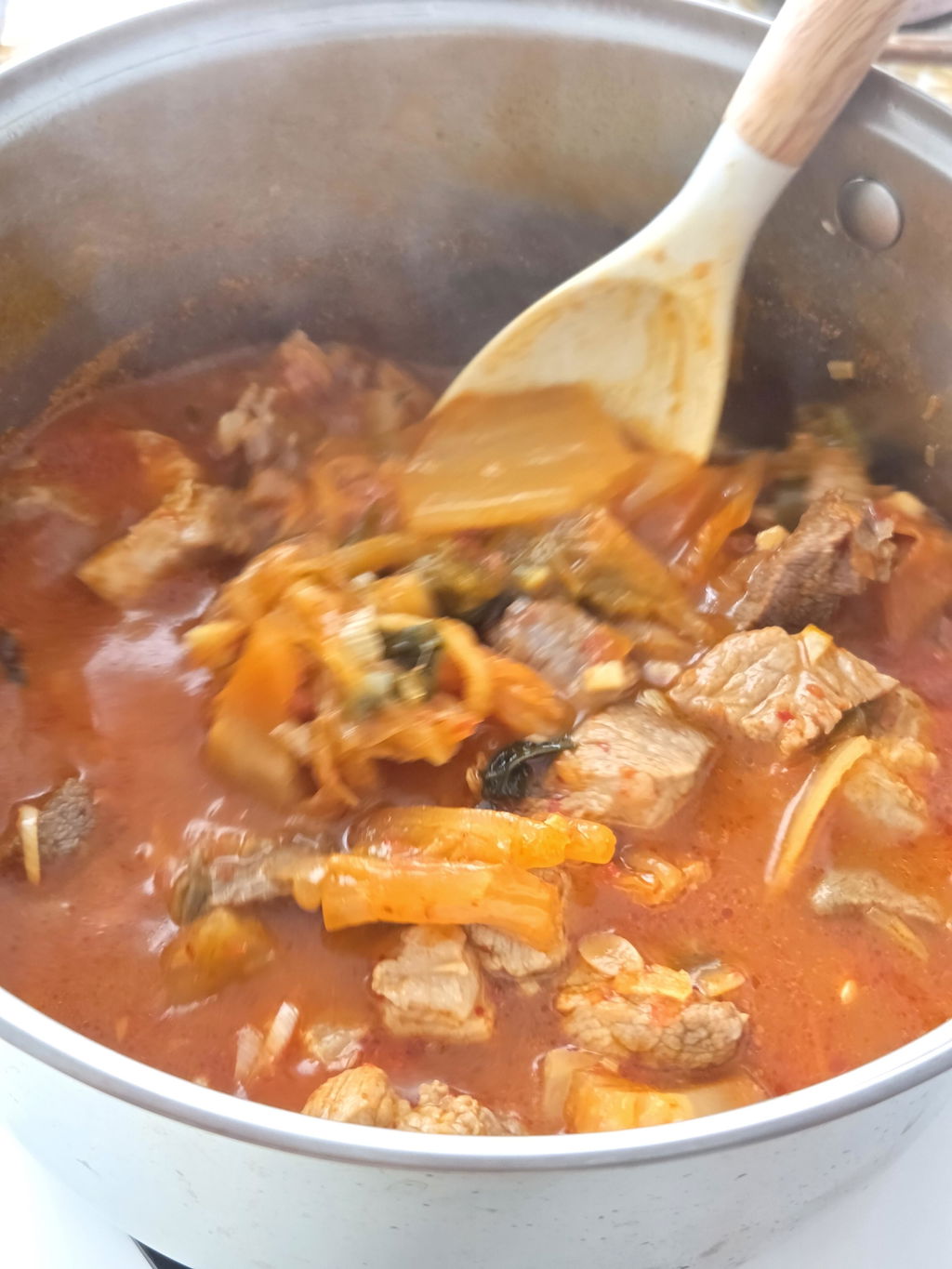
A quintessential Korean stew made by simmering well-fermented (sour) Kimchi together with pork and tofu. The more fermented the Kimchi, the richer the flavour — which is why Koreans prize stew made with aged Kimchi as a special treat. Best enjoyed with a bowl of steamed white rice.
Kimchi-bokkeumbap
김치볶음밥
A beloved Korean one-bowl dish made by stir-frying finely chopped Kimchi with cooked rice in a pan. The most classic way to serve it is topped with a fried egg cooked sunny-side up, then breaking the yolk and mixing it all together. Crushed dried seaweed or melted mozzarella cheese are popular additions.
Samgyeopsal Pairing
삼겹살과 함께
An indispensable companion to Korean grilled pork belly (Samgyeopsal). Wrapping a slice of grilled meat and a piece of Kimchi together in a lettuce leaf and eating it in one bite — known as ssam — is one of the most popular dining experiences in Korea. The brightness of Kimchi cuts through the richness of the pork beautifully.
Kimchi-jeon
김치전
A Korean-style savoury pancake made by mixing finely chopped Kimchi into a flour batter and pan-frying it. One of the foods Koreans most often crave on a rainy day, it is traditionally paired with Makgeolli (Korean traditional rice wine). Crispy on the outside and soft on the inside.
Ramyeon Topping
라면 토핑
Adding a generous amount of Kimchi when cooking Korean instant noodles (Ramyeon) gives the broth a much deeper, more refreshing flavour. The acidity of fermented Kimchi balances the spicy broth perfectly — one of the most popular late-night combinations among Koreans. Adding an egg or sliced green onion makes it even better.

Product Details

Net Weight
500g (Refrigerated)
Origin
Republic of Korea 🇰🇷
Storage
Keep refrigerated at 0–10°C. After opening, press the Kimchi down so it is submerged in its seasoning liquid before resealing. Fermentation continues over time, and the flavour will become more sour as it matures.
Manufacturer
CJ CheilJedang (Bibigo) · Korea
Category
Traditional Korean Fermented Food · Korean Fermented Food

Bibigo is the global Korean food brand of CJ CheilJedang, Korea's largest food company. DotAsia imports authentic products directly from Korea and delivers them fresh to the EU via a dedicated cold chain.

HACCP Certified Direct EU Delivery Cold Chain Guaranteed Authentic Korean Product
Frequently Asked Questions (FAQ)
What is Pogi Kimchi? Is it different from regular Kimchi?

Pogi Kimchi is a traditional Korean fermented food made by fermenting a whole head of napa cabbage. "Pogi" means "whole head" in Korean, referring to the fact that the cabbage is seasoned and fermented without separating the individual leaves. The Bibigo Pogi Kimchi 500g product is this traditionally made whole-head Kimchi, cut into convenient bite-sized pieces and packaged as a refrigerated product. It is distinguished from other types of Kimchi such as Kkakdugi (radish Kimchi) or Yeolmu Kimchi, and is the most widely consumed variety of Kimchi in Korea. Just as European cheeses and wines vary enormously by region, Korean Kimchi also comes in hundreds of varieties.

What allergens does this Kimchi contain?

Bibigo Pogi Kimchi 500g contains the following allergens from the EU list of 14 major allergens: crustaceans, fish, and soybeans. The product uses multiple types of fermented fish sauce, including anchovy, yellow corvina, hairtail, shad, croaker, and sand lance fish sauces. Please also note that the same Bibigo napa cabbage Kimchi product line may share production facilities with molluscs such as oyster, abalone, and mussel, meaning cross-contamination is possible. Anyone with a mollusc allergy should exercise caution before consuming. As for gluten (wheat), the manufacturer has not yet officially confirmed its status, so individuals with gluten sensitivity (including coeliac disease) are advised to contact the manufacturer directly before consuming.

Is this Kimchi suitable for vegans or vegetarians?

No, Bibigo Pogi Kimchi 500g is not suitable for vegan or vegetarian diets. This product contains multiple types of fermented fish sauce — including anchovy, yellow corvina, hairtail, shad, croaker, and sand lance fish sauces — as well as crustaceans (shrimp). This is a characteristic of traditional Korean Kimchi: these fermented seafood sauces are the key ingredients that create Kimchi's distinctive deep umami flavour. Customers following a vegan or vegetarian diet are recommended to look for a dedicated vegan Kimchi product that contains no seafood-derived ingredients.

How should Kimchi be stored, and how long does it keep?

Bibigo Pogi Kimchi is a refrigerated product and must be kept in the refrigerator (0–10°C) at all times. Before opening, follow the best-before date printed on the packaging. After opening, transfer to an airtight container and refrigerate, consuming as soon as possible. Kimchi traditionally becomes more sour as fermentation progresses. Freshly made Kimchi has a strong, crisp freshness, while as it matures the acidity deepens and the fermented flavour becomes richer. This natural change in flavour over time is characteristic of traditional fermented foods — similar to how European cheeses and wines develop greater complexity as they age. Freezing is not recommended, as it can damage the characteristic crunchy texture of Kimchi.

How do you eat Kimchi? Any recommendations for Europeans trying it for the first time?

Kimchi is an incredibly versatile food. For those trying Kimchi for the first time, we recommend the following approaches. First, the simplest way is to serve it as a side dish (banchan) alongside steamed white rice — the intense fermented flavour of Kimchi balances beautifully with the mild, neutral taste of rice. Second, Kimchi-jjigae (Kimchi stew) is the most iconic dish made with Kimchi: a warm, hearty broth simmered with tofu and pork (see the DotAsia recommended recipe above). Third, Kimchi Bokkeumbap is a quick and easy stir-fried rice dish made with Kimchi. As Kimchi has a very bold flavour profile — spicy, sour, salty, and umami-rich — we recommend starting with a small amount and building up as you become accustomed to it. Also note that the sodium content is relatively high at approximately 2.0g per 100g, so please be mindful of your daily intake.

New Arrivals

2+1

Buy 2 Get 1 Free

Buy 2, get 1 free

Bibigo Naturally Fermented Whole Cabbage Kimchi - Poggi Kimchi 500g (Refrigerated)

€7.50
€8.90