05/04/2027
OUT OF STOCK
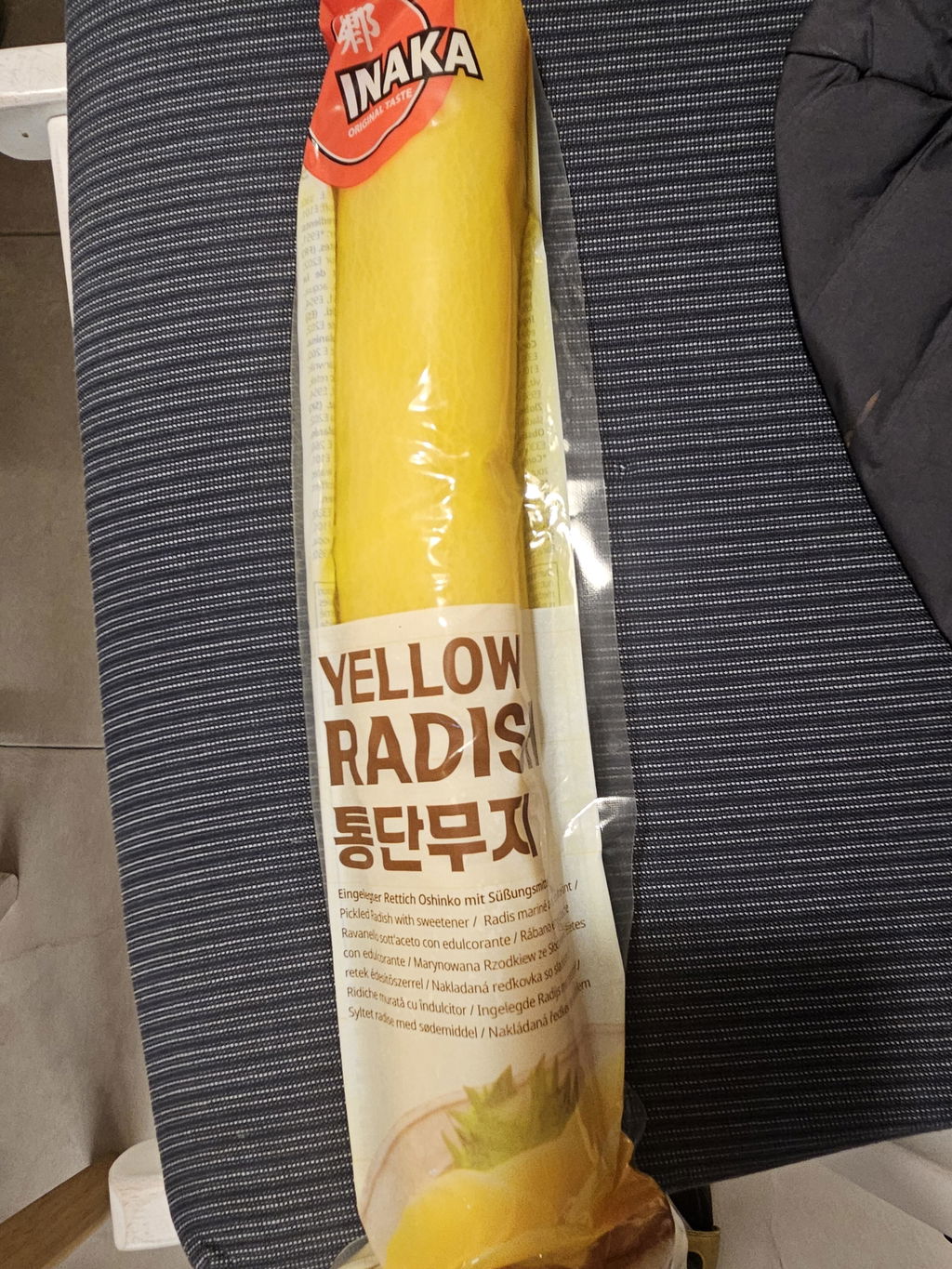
Authentic Asian Daikon Pickle · Danmuji
A vibrant yellow daikon radish pickle with a satisfying crunch and a sweet-tangy flavour. Preserved whole and ready to slice as needed, it is one of the most familiar accompaniments served alongside rice in Asian households. Much like cornichons or sauerkraut in European cuisine, it brightens the palate and cuts through rich, savoury dishes.
Here are 6 of the most popular ways to enjoy Danmuji (whole pickled radish) in Chinese households. Its crisp texture and tangy flavour cut through the richness of oily Chinese dishes, leaving the palate refreshed.
dotAsia brings authentic Asian food directly to European homes. Add a tangy touch of everyday Asian flavour to your table with INAKA Whole Danmuji Pickled Radish.
Danmuji is a well-known Asian pickled radish product. "Whole" refers to the radish being preserved intact, while "Danmuji" describes the sweet, crunchy pickled radish itself. Like European cornichons or sauerkraut it has a pleasant acidity, but it uses whole daikon radish and is characterised by its distinctive yellow colour and crisp bite. Importantly, this product is not a fermented food — it is a pickle-type product made through an acidification process using acetic acid (E260) and citric acid (E330). The flavour is tangy, lightly sweet, and finishes with a mild saltiness.
Yes, INAKA Whole Danmuji is suitable for both Vegan and Vegetarian diets. The ingredients are radish, water, salt, acidifiers (acetic acid, citric acid), preservative (potassium sorbate), sweeteners (aspartame, saccharin, acesulfame-K), and colour (riboflavin, E101). No animal-derived ingredients are included. It is also a Gluten-Free product.
Yes, INAKA Whole Danmuji contains three EU-approved artificial sweeteners: aspartame (E951), saccharin (E954), and acesulfame-K (E950). These are used to provide sweetness in place of sugar. Importantly, aspartame contains phenylalanine, and in accordance with EU Regulation (EU 1333/2008), the label carries the warning "Contains a source of phenylalanine." Individuals with phenylketonuria (PKU) must take care before consuming this product. For suitability within a diabetic diet, please consult your personal physician or a registered dietitian.
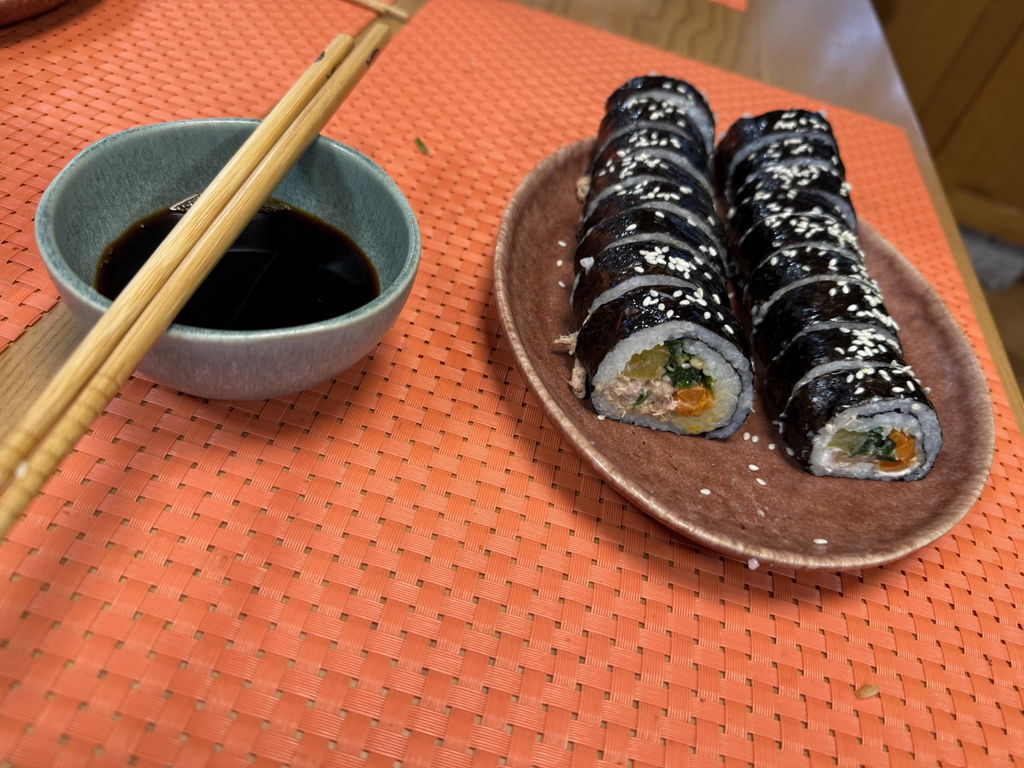
Danmuji is used in a wide variety of ways across Asian cuisine. The most common method is to slice it thinly and serve it as a side dish alongside rice, noodles, or stir-fried dishes. It is an essential ingredient in Gimbap (Korean rice rolls), and can be placed on top of Bibimbap or rice bowls to add crunch and acidity. For a European twist, it works wonderfully as a pickle substitute in sandwiches, tacos, poke bowls, or on a cheese board. It can be sliced to your preferred thickness and eaten immediately — no cooking required.
Before opening, store in a cool place away from direct sunlight. After opening, transfer to an airtight container and refrigerate (below 4°C). It is recommended to consume the product as soon as possible after opening; when refrigerated, it is generally best enjoyed within a few weeks. Always follow the best-before date and storage instructions printed on the product label. This product contains the preservative potassium sorbate (E202), which helps maintain quality for a period after opening.
냉장포장으로 배송 잘 되서 왔어요 도착해서도 차가유 상태였어요
Imprescindible, tanto para acompañamiento, como para complementar kimbap. He probado otras marcas de Danmuji, pero esta me encanta.
muy fresco y delicioso
Súper rico y le da un toque perfecto al Kimbap
Sign up for early Sale access plus tailored new arrivals, trends and promotions. To opt out, click unsubscribe in our emails
Please select your shipping country.
Buy from the country of your choice. Remember that we can only ship your order to addresses located in the chosen country.