



Jump toRecipeVideoStep by step
This jjajangmyeon recipe gets you glossy, savoury Korean black bean noodles on the table in about 40 minutes. You have seen it in every K-drama — now you can twirl it at home. And there is one small trick with the paste that changes everything.

Why this jjajangmyeon recipe works every time
Most first attempts at jjajangmyeon (짜장면) fail for one reason: bitter sauce. The black bean paste goes straight into the pan with the meat, and it never loses its raw, harsh edge. We have made this dish hundreds of times, both at home and while testing products for the shop. So we know exactly where things go wrong. This version fixes it. The paste gets fried in oil first, on its own, until it smells sweet and roasted. After that, everything else is simple stir-frying. Pork, onion, courgette, a splash of stock, a quick thickening. If you can make a bolognese, you can make this. Honestly, it is easier.
This post teaches you two secrets. First, how to fry chunjang properly, so your sauce tastes like a Korean-Chinese restaurant rather than a jar. Second, how to get that signature glossy, spoon-coating texture with a simple starch slurry — never gluey, never watery. Along the way, we cover substitutions too. No pork? Fine. No time at all? We have an instant shortcut for that as well. By the end, you will wonder why you ever paid delivery fees for this.

What is jjajangmyeon?
Jjajangmyeon (짜장면) is Korea's beloved noodle dish in black bean sauce. It descends from Chinese zhajiangmian, brought over by immigrants and transformed in Incheon's Chinatown around the early 1900s. The Korean version is sweeter, darker and saucier than its Chinese ancestor. Today it is the nation's default delivery food — moving house, payday, Black Day on 14 April, it is always jjajangmyeon. The name comes from chunjang (춘장), the fermented black bean paste, plus myeon (면), meaning noodles. One slurp and you will understand the obsession.
What you need for this jjajangmyeon recipe
The heart of the dish is chunjang, the fermented black bean paste. There is no real substitute, so this is the one thing worth ordering. Everything else is flexible. Pork belly is traditional, yet chicken, beef or mushrooms work well. For noodles, thick fresh wheat noodles are ideal; udon is a brilliant stand-in. A starch slurry gives the sauce its shine.
- : the fire-roasted black bean paste that gives the sauce its deep, smoky-sweet backbone — non-negotiable.
- : one spoonful adds savoury depth and rounds off the paste's edge.
- : our slurry starch of choice; it thickens the sauce into that glossy restaurant coat.
- : the classic pairing — the pork renders fat, the onion melts into sweetness.
- : they soak up sauce and add gentle body; both are cheap at any European supermarket.

Technique and common mistakes
The single most important step is frying the chunjang. Raw paste tastes bitter and flat. Fried paste tastes roasted, sweet and deeply savoury. So heat a generous amount of oil, add the paste, and stir it gently over medium heat for two to three minutes. It should bubble softly and turn glossy, never smoke. Then set it aside and build the stir-fry in the same pan. This one habit separates homemade jjajangmyeon that disappoints from the kind that gets requested weekly.
- Fry the paste first: Two to three minutes in oil transforms chunjang from bitter to roasted-sweet. Never skip it.
- Do not drown the sauce: Add stock gradually. You want the vegetables simmering in sauce, not floating in soup.
- Slurry off the boil: Stir in the starch mixture, then let it bubble for one minute. Rushing gives you lumps.
Tip: Rinse the cooked noodles briefly under warm water to remove surface starch — the sauce clings far better.
Step by step, in photos


What to serve with jjajangmyeon
Every Korean-Chinese restaurant serves jjajangmyeon with the same trio: yellow pickled radish, raw onion, and a dab of extra paste for dipping. The radish is essential — its sharp crunch cuts straight through the rich sauce. At home, we add something crispy on the side, because that contrast is half the joy. A cold fizzy drink does not hurt either.
- Pickled yellow radish — the classic danmuji side — crunchy, tangy, and the perfect palate reset between bites.
- Bibigo vegetable spring rolls — crisp, golden and ready from frozen in minutes; the ideal starter.
- Yopokki jjajang tteokbokki cup — chewy rice cakes in the same black bean flavour — for the truly committed.
Twirl, slurp, and do not worry about the sauce on your chin — that is tradition. — DotAsia Kitchen x
More Korean recipes

How it’s made, on video
Shop the ingredients
In stock · shipping across Europe
 Jinmi Chunjang Fire-Roasted Black Bean Paste 300g3.50 €Shop
 Assi Stir-Fry Jjajang Paste 1kg7.50 €Shop
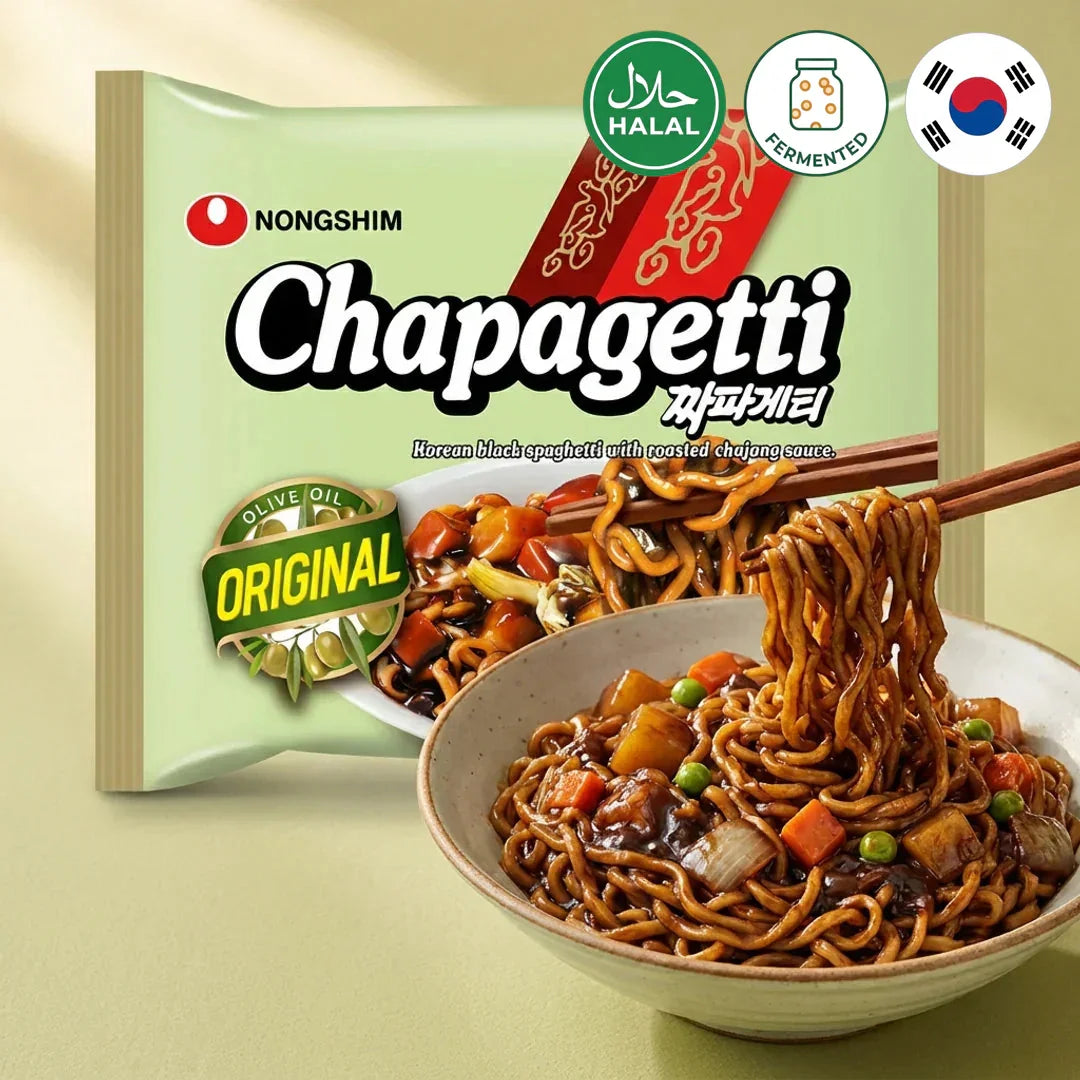
 Nongshim Chapagetti 140g1.59 €Shop
 Nongshim Chapagetti Multipack (5 pack)7.90 €Shop
 Ottogi Real Jjajang (4 pack)7.00 €Shop
 Ottogi Real Jjajang 140g1.85 €Shop
 INAKA Pickled Yellow Radish for Gimbap 350g2.85 €Shop
 Cock Tapioca Flour 400g1.79 €Shop

Jjajangmyeon (Korean Black Bean Noodles)
By: DotAsia Kitchen
Prep: 15 min·Cook: 25 min·Total: 40 min
Main course·Korean-Chinese cuisine·Servings: 2
★★★★★A DotAsia house recipe
The classic jjajangmyeon recipe: fried chunjang, pork belly and sweet onion in a glossy black bean sauce over chewy noodles. Spice level: none — completely mild.
Ingredients
The sauce
The stir-fry
Noodles and garnish
Method
- Heat the 3 tbsp oil in a wok over medium heat. Add the chunjang and fry for 2–3 minutes, stirring constantly, until glossy and fragrant.
- Scoop the fried paste into a small bowl, leaving most of the oil behind in the wok.
- Raise the heat to medium-high and add the pork belly. Cook for 4–5 minutes until the edges turn golden and the fat renders.
- Stir in the ginger and cook for 30 seconds until fragrant.
- Add the onion, potato and courgette. Stir-fry for 3–4 minutes until the onion starts to turn translucent.
- Return the fried paste to the wok with the sugar and oyster sauce. Stir to coat everything evenly.
- Pour in the water or stock and bring to a gentle boil. Simmer for 8–10 minutes until the potato is tender.
- Stir the tapioca slurry, then drizzle it in while stirring. Let the sauce bubble for 1 minute until it coats a spoon.
- Boil the noodles according to the packet, then rinse briefly under warm water and drain well.
- Divide the noodles between two bowls, ladle the sauce generously on top, and finish with the cucumber. Mix well before eating.
Notes
- No pork? Swap in diced chicken thigh, beef, or king oyster mushrooms — fry them exactly the same way.
- Cooking for a crowd? The Assi stir-fry jjajang 1 kg tub is pre-seasoned and scales up beautifully.
- Zero time? Chapagetti is Korea's instant homage — five minutes, one pot, surprisingly close.
- Leftover sauce keeps for 3 days in the fridge. Reheat gently with a splash of water and serve over rice as jjajangbap.
- Korean Bapsang's video shows a vegan version: skip the pork and oyster sauce, and use mushrooms plus a little extra sugar.
- Fried chunjang keeps for weeks in a sealed jar in the fridge, so consider frying the whole tub in one go.
Nutrition (per serving, approx.): Calories 780 kcal · Protein 27 g · Carbs 96 g · Fat 31 g
Did you make this recipe?
We love seeing your dishes — tag us on Instagram @dotasia.eu
Frequently asked questions
Can I make jjajangmyeon without black bean paste?
Not convincingly — chunjang is the dish. In a pinch, mix hoisin with a little doenjang and dark soy, but the flavour will drift Chinese rather than Korean. Since a tub of chunjang costs a few euros and keeps for months in the fridge, we would simply order the real thing.
Can I make jjajangmyeon without pork, or halal?
Yes, easily. Swap the pork belly for chicken thigh, beef, prawns or king oyster mushrooms, and replace oyster sauce with soy sauce. Chunjang itself is made from fermented soybeans and wheat. For halal needs, always check the label of each product, as certification varies between brands and batches.
What is the difference between jjajangmyeon and Chapagetti?
Chapagetti is the instant noodle tribute; jjajangmyeon is the real dish. Instant versions use powdered sauce and take five minutes, while homemade delivers fresh vegetables, proper pork and a far deeper sauce. Both have their place. Ottogi Real Jjajang sits closest to the restaurant flavour among the instant options.
Is jjajangmyeon Korean or Chinese?
It is Korean-Chinese. The dish evolved from Chinese zhajiangmian, brought by immigrants to Incheon over a century ago. Koreans made it darker, sweeter and saucier, and it became a national comfort food. Today's jjajangmyeon tastes quite different from its Chinese ancestor — most consider it a Korean dish with Chinese roots.
Ready to cook the real thing?
We ship chunjang, noodles and every side dish in this post across Spain, Portugal and the EU — straight to your door.
Shop all products🍜
Black bean noodle night
Chunjang and everything else, delivered across Spain and Portugal.
Go to the shop →


