




Jump toRecipeVideoStep by step
This kimchi recipe is the one we make in our own kitchens, week after week. It turns one napa cabbage into a jar of crunchy, tangy, gently fizzing kimchi (김치) — and it works without fish sauce. The real trick isn't the chilli at all. It's the salt.

Why this kimchi recipe works every time
Most first attempts fail for one boring reason: under-salted cabbage. The leaves stay stiff, the paste slides off, and the jar turns watery. So we fixed that first. This kimchi recipe uses a measured brine, a timed soak, and a turn every 30 minutes. Consequently, the cabbage bends like ribbon and drinks in the seasoning. Everything else is just mixing. We've sold thousands of jars of the commercial stuff, and honestly, the homemade version beats it on crunch alone. Moreover, you control the heat, the funk and the salt. No special kit needed — a big bowl, a clean jar, and two days of patience.
Two secrets carry this whole post. First, the rice porridge (풀). It sounds odd, yet this thin, kelp-infused paste is what makes the seasoning cling to every leaf instead of pooling at the bottom. Second, the soup soy sauce swap. Traditional recipes lean on fish sauce and salted shrimp. Our kimchi recipe uses Korean soup soy sauce instead, which brings deep umami while keeping the jar vegetarian. As a result, it suits more kitchens — and more readers across Europe. Master these two moves and you can riff forever: radish kimchi, spring onion kimchi, the lot.

What is kimchi?
Kimchi (김치) is Korea's everyday fermented vegetable dish, eaten at almost every meal. The classic version is whole-cabbage kimchi (통배추김치), made by salting napa cabbage and coating it in a paste of gochugaru, garlic and ginger. Each autumn, families gather for kimjang (김장), the communal kimchi-making season — a tradition recognised as UNESCO intangible heritage. Lactic fermentation does the rest. Over days, the flavour shifts from fresh and peppery to sour and deeply savoury. We love it at every stage. Young kimchi crunches like a salad; ripe kimchi begs to be fried with rice.
What you need for this kimchi recipe
The shopping list is shorter than you'd think. One napa cabbage, coarse salt, and a handful of aromatics cover most of it. The two non-negotiables are proper Korean chilli powder (gochugaru, 고춧가루) — paprika and cayenne won't ferment or taste right — and a salty umami base. Importantly, we use soup soy sauce rather than fish sauce, so this kimchi recipe stays vegetarian by default.
- : The backbone. Coarse-ground, fruity and brick-red — made specifically for kimchi, not for sprinkling.
- : Our fish sauce substitute. Saltier and lighter than regular soy sauce, it seasons the paste without darkening it.
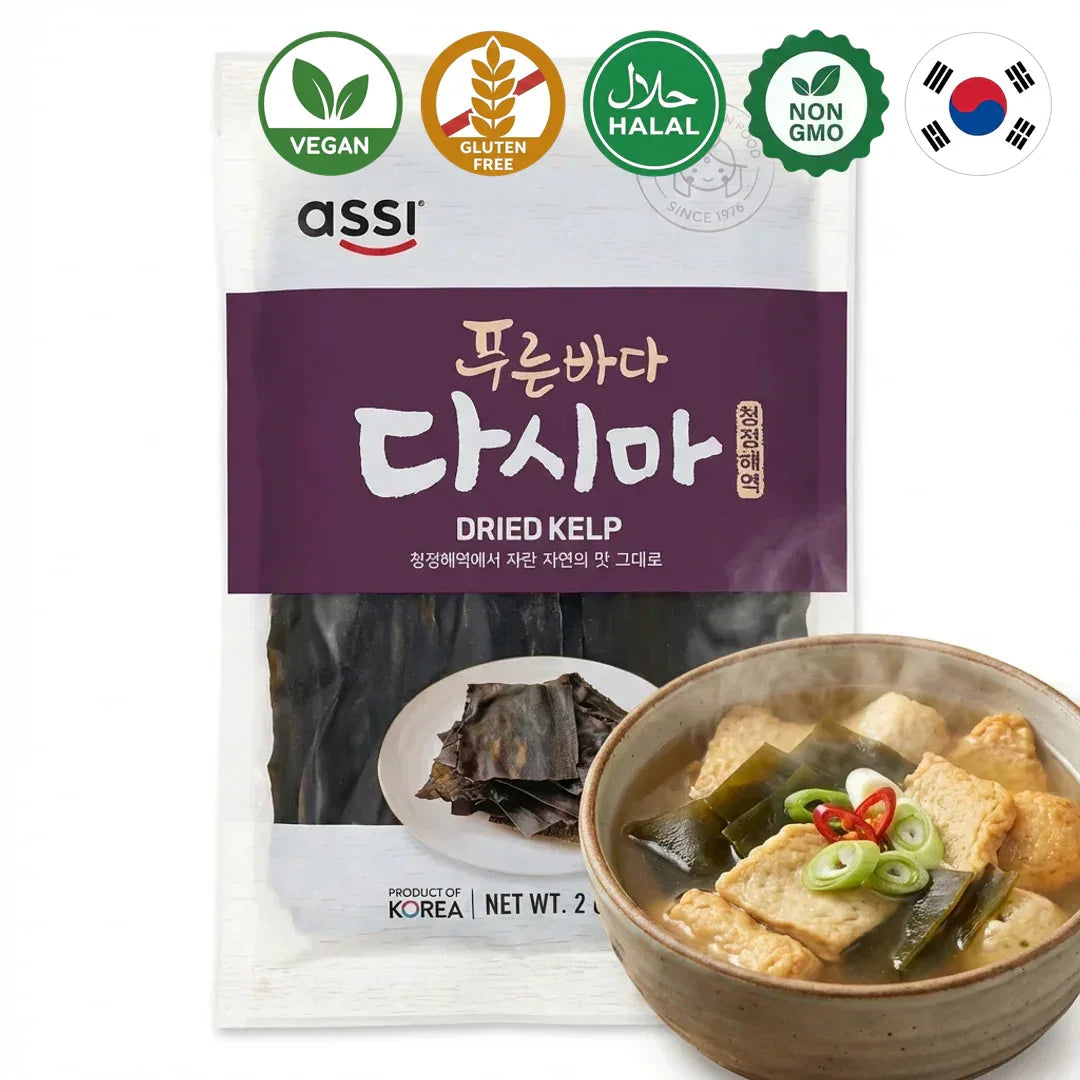
- : Simmered into the porridge base for a quiet layer of savoury depth.
- : Choose a heavy, tightly packed cabbage. Coarse salt draws water out slowly and evenly.
- : The fresh aromatics. Any European supermarket has them.

Technique and common mistakes
Salting is the whole game. The cabbage must lose roughly a quarter of its water before the paste goes anywhere near it. Therefore, give it two full hours, and turn the quarters every 30 minutes so the thick stem ends sit in the brine. Here's the test: bend a white stem piece. If it folds without snapping, you're ready. If it cracks, wait longer. Rushing this stage is the single most common mistake we see, and no amount of seasoning rescues a stiff, under-salted leaf. After that, rinse three times — yes, three — or the finished kimchi turns harshly salty.
- Bend, don't time: Clocks lie; cabbages vary. Trust the bend test on the thickest stem, not the timer.
- Cool the porridge fully: Hot porridge dulls the gochugaru and kills the friendly bacteria. Let it reach room temperature first.
- Leave headspace: Fermentation makes gas and brine rise. Fill jars only four-fifths full, or your fridge will smell heroic.
Tip: Press the kimchi down so brine covers it — anything poking above the liquid is where trouble starts.
Step by step, in photos


What to serve with kimchi
Kimchi rarely stars alone — it's the sharp, crunchy counterpoint on the table. The simplest pairing is also the best: hot rice, a fried egg, and a generous tangle of kimchi. Once your batch turns properly sour, around week three, its second life begins. Sour kimchi makes the best kimchi pancakes (김치전), fried rice and stew. In other words, never throw out "too ripe" kimchi. That's when this kimchi recipe really pays you back.
- CJ cooked rice — Ninety seconds in the microwave, and you've got the classic kimchi-and-rice pairing.
- Korean pancake mix — Chop ripe kimchi into the batter for crispy-edged kimchi-jeon.
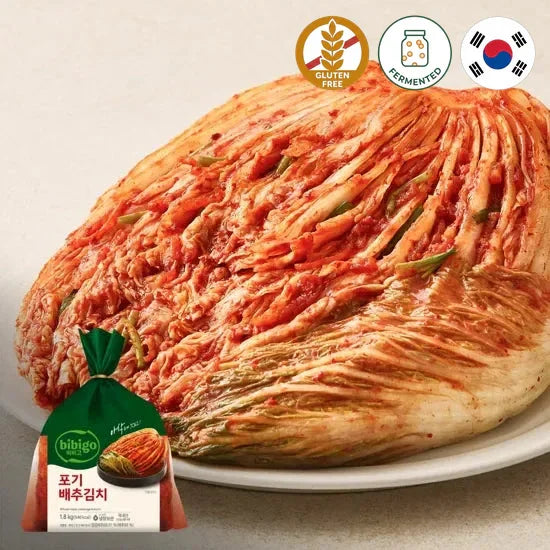
- Bibigo whole cabbage kimchi — A handy benchmark — taste it next to your batch and see how close you got.
One cabbage, one jar, and your fridge suddenly smells like a Korean kitchen — we call that a win. — DotAsia Kitchen x
More Korean recipes

How it’s made, on video
Shop the ingredients
In stock · shipping across Europe
 Hansung Chilli Powder for Kimchi 1 kg11.75 €Shop
 Hansung Kimchi Red Pepper Flakes 2.5 kg26.90 €Shop
 Nongshim Taekyung Bright Red Chilli Powder for Kimchi 500 g6.99 €Shop
 Sempio 100% Sun-Dried Fine Chilli Powder 500 g6.50 €Shop
 Sempio Soup Soy Sauce 860 ml4.95 €Shop
 Assi Dried Sea Kelp 56 g3.39 €Shop
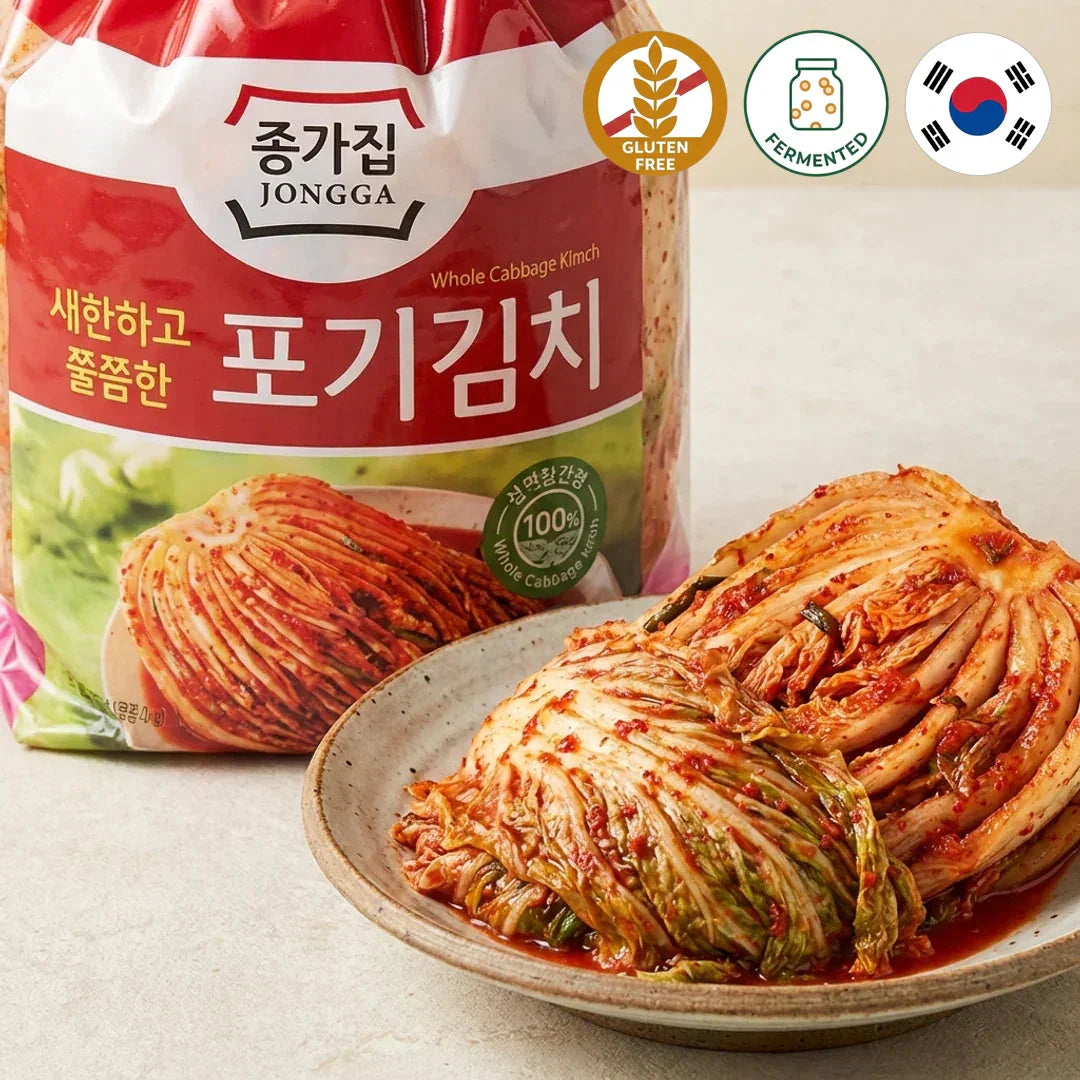
 Jongga Whole Cabbage Kimchi 1 kg (chilled)14.95 €Shop
 Bibigo Whole Cabbage Kimchi 1 kg (chilled)14.95 €Shop

Authentic Kimchi (Tongbaechu-Kimchi)
By: DotAsia Kitchen
Prep: 150 min·Cook: 10 min·Total: 160 min
Side dish·Korean cuisine·Servings: 12
★★★★★A DotAsia house recipe
Our authentic kimchi recipe: salted napa cabbage coated in a gochugaru paste, fermented at home — no fish sauce required. Spice: medium-hot, easily adjusted.
Ingredients
Cabbage
Porridge base
Kimchi paste
Method
- Quarter the cabbage lengthways through the core, keeping the leaves attached. Make a small slit in each core so brine can reach the centre.
- Dissolve half the salt in the water, dip each quarter, then sprinkle the remaining salt between the leaves, focusing on the thick stems. Rest for 2 hours, turning every 30 minutes, until a stem bends without snapping.
- Rinse the quarters three times in cold water to remove excess salt. Drain cut-side down in a colander for 30 minutes.
- Simmer the kelp in 500 ml water for 5 minutes, then remove the kelp pieces. Keep the stock in the pot.
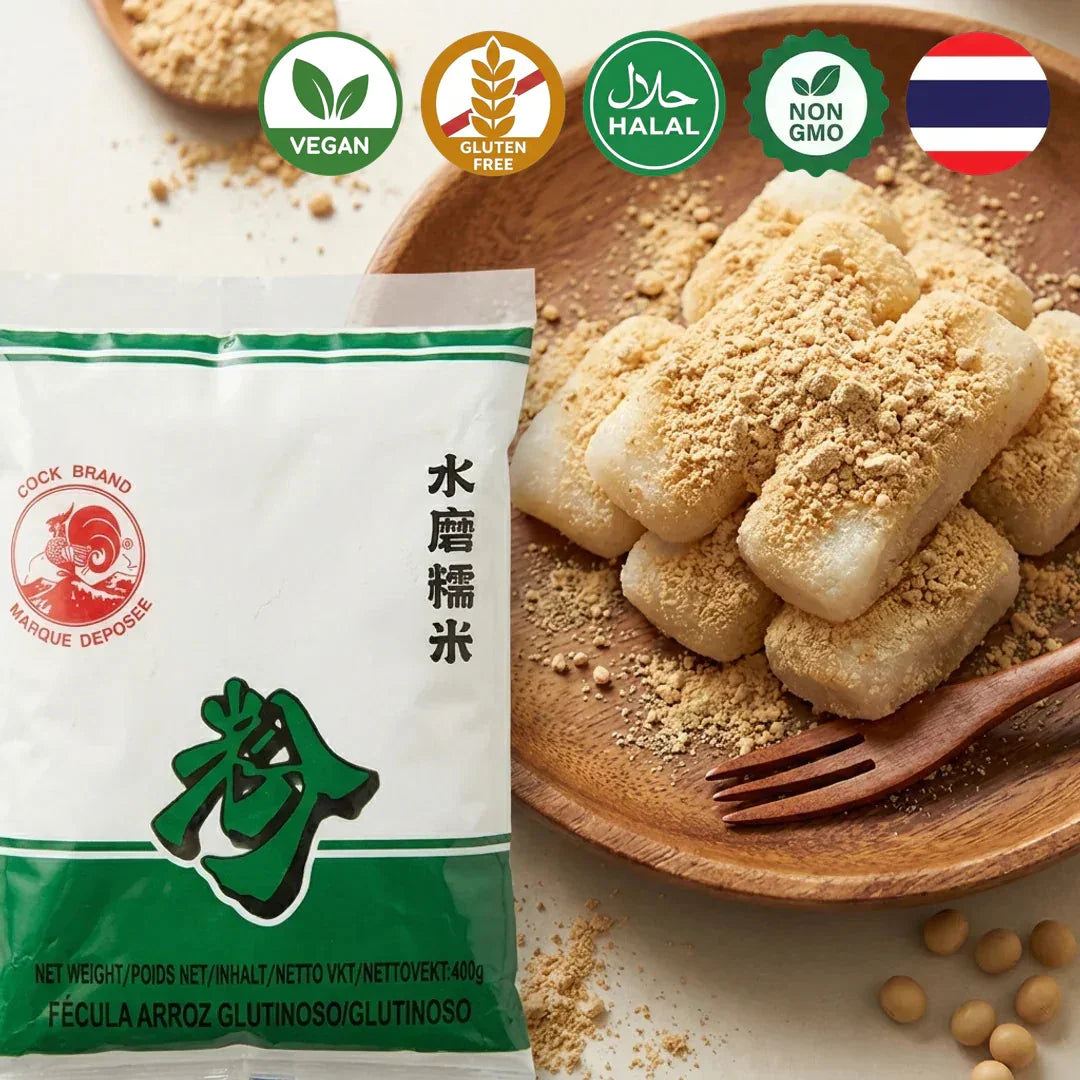
- Whisk the glutinous rice flour into the stock and stir over a medium heat for 2 minutes until it thickens to a thin custard. Stir in the sugar and cool completely.
- Combine the cooled porridge with the gochugaru, soup soy sauce, garlic, ginger and grated onion. Stir into a thick, glossy red paste.
- Fold the daikon matchsticks and spring onions through the paste. Taste — it should seem slightly too salty, as the cabbage will balance it.
- Wearing gloves, spread paste over every leaf of each quarter, working from the core outwards. Fold each quarter in half and wrap its outer leaf around it.
- Press the bundles tightly into a clean 2-litre jar, squashing out air pockets. Leave a fifth of the jar empty and close the lid loosely.
- Leave at room temperature for 1–2 days until tiny bubbles appear and it smells pleasantly sour. Then refrigerate; it tastes best from day three onwards.
Notes
- Not vegetarian? Replace the soup soy sauce with 3 tbsp fish sauce plus 1 tbsp salted shrimp for the fullest traditional flavour — that's exactly how Maangchi makes hers in the video above.
- Heat level: 100 g gochugaru gives a medium-hot jar. Drop to 70 g for a milder batch; the colour stays just as vivid.
- Batch cooks: planning a proper kimjang session? The 2.5 kg pack of kimchi chilli flakes works out far cheaper per batch.
- No time to ferment? A chilled tub of Jongga whole cabbage kimchi is the brand most Korean households reach for.
- Do not substitute gochujang paste for gochugaru — it contains fermented soybeans and starch, and it turns the kimchi sweet and gluey.
- Storage: keeps for approx. 3 months refrigerated. Always use clean utensils and press the kimchi back under its brine.
Nutrition (per serving, approx.): Calories 35 kcal · Protein 2 g · Carbs 7 g · Fat 1 g
Did you make this recipe?
We love seeing your dishes — tag us on Instagram @dotasia.eu
Frequently asked questions
Can I make kimchi with gochujang paste?
No — gochugaru (Korean chilli powder) is the correct ingredient. Gochujang contains starch, sugar and fermented soybeans, which make the paste gluey and interfere with clean fermentation. If gochujang is all you have, use one spoonful at most alongside chilli powder. For proper results, kimchi-grade gochugaru is worth buying.
Can I make kimchi without fish sauce?
Yes, easily. Replace fish sauce with Korean soup soy sauce (guk-ganjang), which delivers a similar salty, savoury depth and keeps the kimchi fully vegetarian. The fermented flavour develops regardless, because the cabbage's own bacteria do the work. Many Korean temple kitchens have made fish-free kimchi for centuries.
How long does homemade kimchi take to ferment?
Around 1–2 days at room temperature, then 2–3 days in the fridge for the flavour to settle. Look for small bubbles in the brine and a fresh, sour smell. Warmer kitchens ferment faster, so taste daily. Fermentation then continues slowly in the fridge for months.
How long does kimchi keep in the fridge?
Approx. 3 months, and it never really "goes off" — it just gets more sour. Keep it submerged under its brine, use clean utensils, and store it in the coldest part of the fridge. Once it's too tangy for eating fresh, cook with it: pancakes, fried rice and stews.
Get your kimchi kit delivered
We ship gochugaru, soup soy sauce and ready-made kimchi chilled across Spain, Portugal and the EU — your first batch is one basket away.
Shop all products


