09/09/2027
OUT OF STOCK
Authentic Korean Food · Authentic Korean Wheat Noodles
'So-myeon' is Korea's most beloved thin wheat noodle, a staple in Korean households for generations. In Korean culture, long noodles are traditionally served at celebrations such as birthdays, weddings, and festive gatherings as a symbol of longevity and good fortune. Ottogi, founded in 1969, is one of Korea's most iconic food brands. Their Yenal Guksu So-myeon is a long-standing bestseller, cherished for its smooth yet springy texture. From warm Janchi-guksu served in a clear anchovy broth, to cold and spicy Bibim-guksu, to the creamy chilled soy milk noodles of Kong-guksu — one pack opens the door to a wide range of authentic Korean noodle dishes.
※ Values above are based on uncooked dry noodles. Please use per serving (approx. 100g) as a reference guide.
Wheat flour (wheat: origin Australia, USA), refined salt (origin Korea)
A clean and simple traditional Korean wheat noodle made with just two ingredients. Contains no artificial additives, preservatives, or colourings.
This product is made from wheat and therefore contains gluten. Persons with a gluten allergy (coeliac disease) or wheat allergy should avoid consumption. Mandatory declaration in accordance with Annex II of EU Food Information Regulation 1169/2011.
So-myeon itself is characterised by a clean, mild wheat aroma and a delicate, smooth texture. Depending on the broth or seasoning used, it transforms into a wide variety of authentic Korean noodle dishes.
Seven classic ways Korean households enjoy Ottogi Yenal Guksu So-myeon — experience the authentic flavours of Korea.
Ottogi Yenal Guksu So-myeon — Korea's most essential and versatile noodle. dotAsia ships directly from Korea to your table in Europe, with care.
Ottogi Yenal Guksu So-myeon is one of Korea's most representative thin wheat noodles. The ingredient list is remarkably simple: just wheat flour and refined salt. In terms of thickness, it is thinner than Italian spaghettini and is comparable to Japanese somen (sōmen). The noodles are very thin and delicate, cooking in just 3–4 minutes in boiling water. In Korea, they are enjoyed in a wide variety of ways — in clear broth as Janchi-guksu, tossed cold as Bibim-guksu, or served in chilled soy milk broth as Kong-guksu.
Yes, Ottogi Yenal Guksu So-myeon is suitable for both vegans and vegetarians. The product contains only wheat flour and refined salt, with no animal-derived ingredients whatsoever. However, please note that broths or sauces used during cooking may contain animal-based ingredients. If you follow a vegan diet, we recommend using vegetable stock or kelp-based broth when preparing the noodles.
This product contains wheat, which is a source of gluten and a known allergen. Under EU Food Information Regulation (EU) No 1169/2011, wheat (gluten) is one of the 14 major allergens that must be declared on the label. Persons with a wheat or gluten allergy, or those with coeliac disease, should not consume this product. The product does not contain dairy, eggs, nuts, or other major allergens.
A few simple tips will help you get the best results. First, use a generous amount of water relative to the quantity of noodles. Second, add the noodles only after the water has reached a full rolling boil, and cook for 3–4 minutes. Third, if the water threatens to boil over during cooking, add a cup of cold water — this helps the noodles become springier. Fourth, once cooked, rinse the noodles thoroughly under cold running water several times to remove surface starch; this prevents them from sticking together and keeps the texture firm and bouncy. For Bibim-guksu, rinse well under cold water and briefly dip in ice water before draining for an extra-springy texture.
Ottogi Yenal Guksu So-myeon contains approximately 1,530mg of sodium per 100g (equivalent to about 3.83g of salt), which is relatively high. With this in mind, we recommend reducing the amount of additional salt or soy sauce used during cooking. For example, when making Bibim-guksu, season the sauce more lightly than usual; for broth-based dishes, adjust the saltiness of the stock separately to manage overall sodium intake. Those on a sodium-restricted diet should consider both the serving size and the salt content of any accompanying sauces or broths.
갓뚜기!
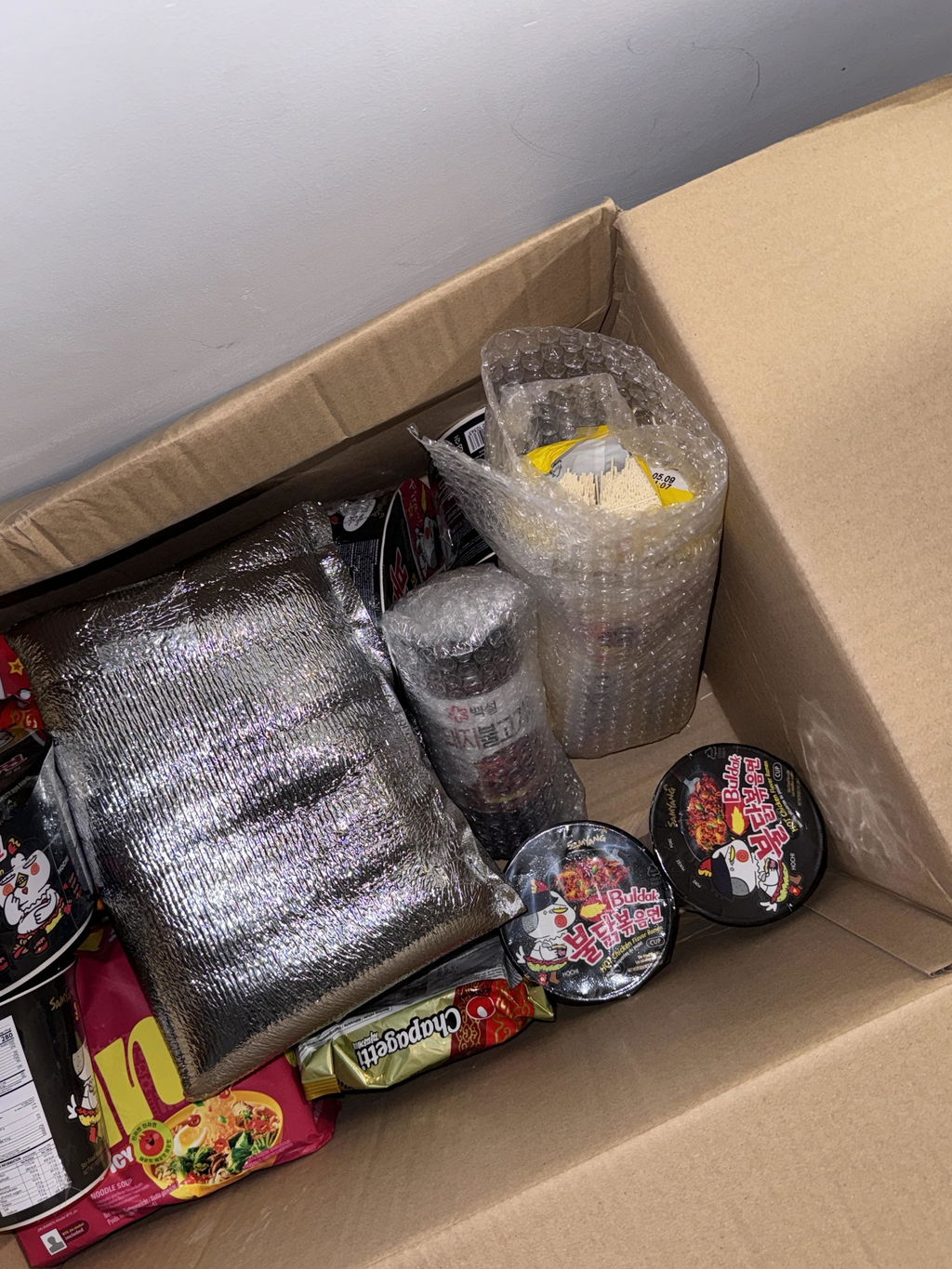
소면이 터져서 왔습니다. 세로로도 한 번 더 감싸주시면 좋겠습니다!
이용에 불편을 드려 죄송합니다. 소면 포장시 더 신경 써서 포장하도록 하겠습니다.
Sign up for early Sale access plus tailored new arrivals, trends and promotions. To opt out, click unsubscribe in our emails
Please select your shipping country.
Buy from the country of your choice. Remember that we can only ship your order to addresses located in the chosen country.