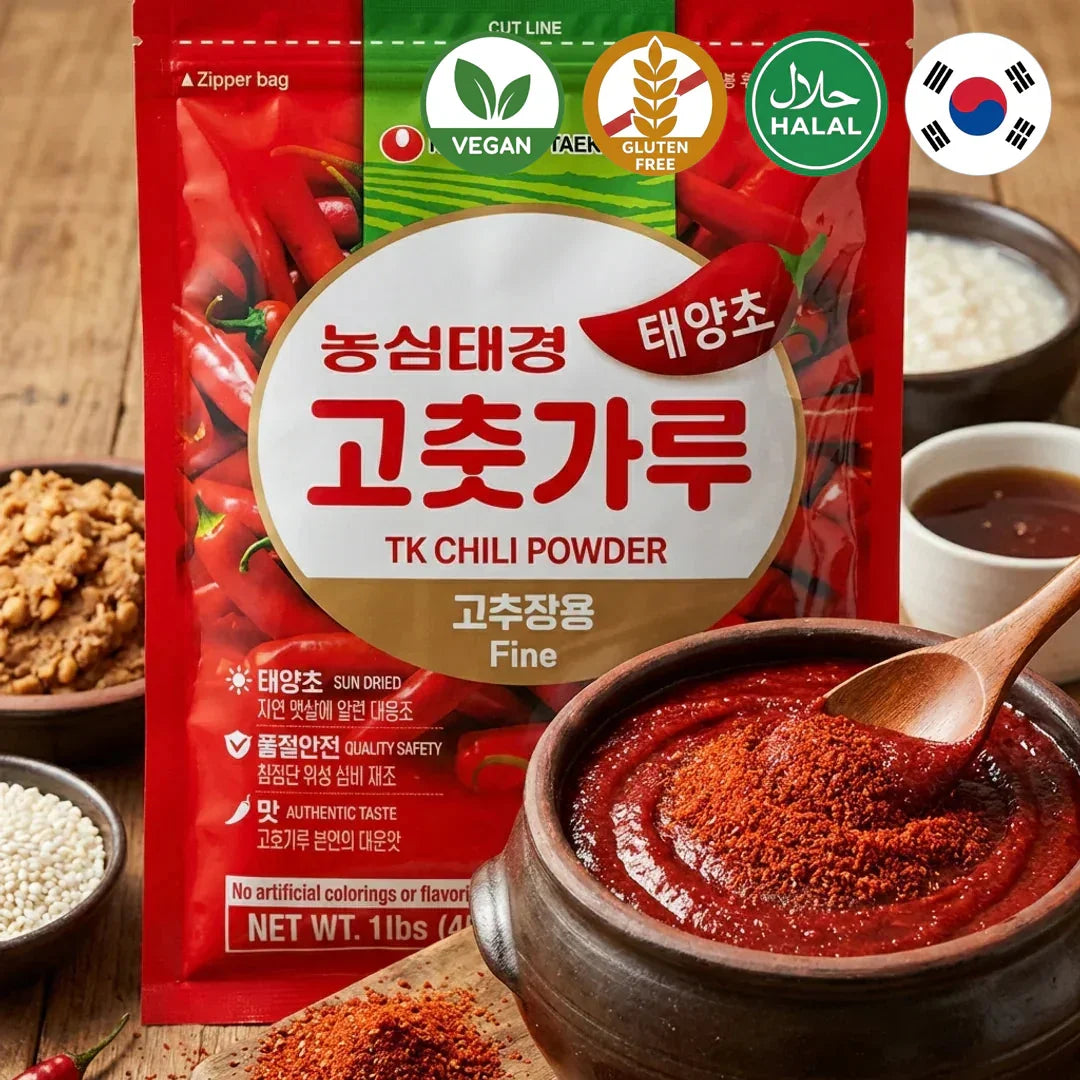
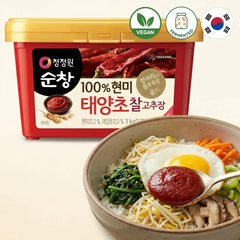
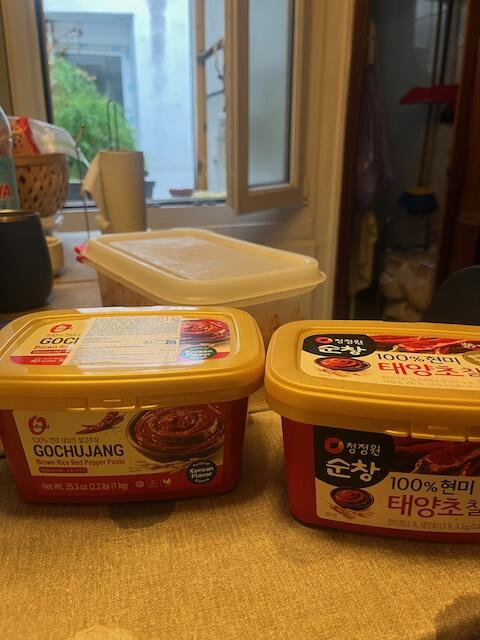
Sunchang is a small region in North Jeolla Province, South Korea, renowned for centuries as the home of Korea's finest Gochujang. The area's morning mist, wide daily temperature swings, and clean water create an ideal environment for fermentation microorganisms, producing a Gochujang with a deep, rounded complexity. Chungjungone Sunchang Gochujang is crafted using sun-dried red peppers, glutinous brown rice, meju (fermented soybean), and sea salt — all following authentic Korean traditional methods.
The production involves two stages of fermentation. First, the starch in the glutinous brown rice is naturally converted into sweetness through koji (nuruk). Then, red pepper powder and meju are added for a second fermentation. This is a modern reinterpretation of the traditional Korean onggi (earthenware) aging method, resulting in a deep umami character and a well-balanced heat developed over time. After fermentation, the paste is pasteurised for safe distribution.
Compared to well-known European fermented foods, Gochujang belongs in the same category as Italian aged balsamic vinegar, long-matured French cheese, or German sauerkraut — all sharing the same essence: time transforming simple ingredients into complex, rich flavour. Just as sauerkraut transforms cabbage, Korean fermentation turns grains and red peppers into a deeply rounded and flavourful condiment.