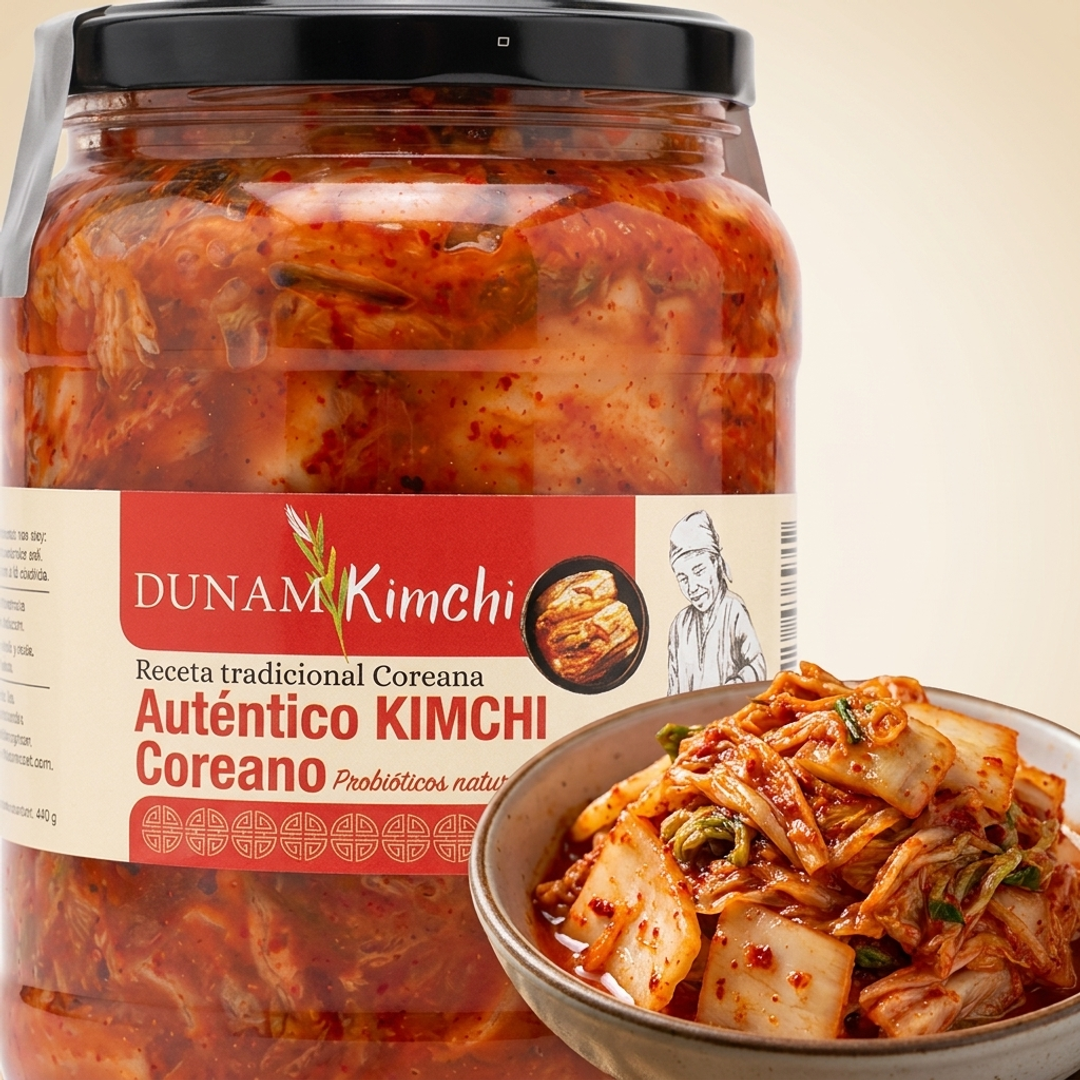
Kimchi is one of Korea's oldest fermented foods and a symbol of Korean food culture, inscribed on the UNESCO Intangible Cultural Heritage list in 2013. Bibigo Mat Kimchi follows the traditional method passed down through Korean households: napa cabbage is salted with coarse sea salt to draw out moisture, then carefully hand-mixed with gochugaru (red pepper flakes), garlic, ginger, green onion, onion, and a fermented seafood sauce made from anchovy and shrimp, before being left to ferment naturally.
Fermentation is a natural process in which lactic acid bacteria (Lactobacillus) present in the seasoning slowly convert the natural sugars in the cabbage into acids. Over time, a pleasant sourness and deep umami flavour develop together — in Korean, this ripening process is described as "익는다" (iknunda), meaning "to ripen." Freshly made Kimchi has a crisp, vibrant flavour, while Kimchi that has fermented for a few more days develops a richer, more tangy and complex taste.
For European palates, a familiar analogy: just as sauerkraut becomes pleasantly sour through natural fermentation, or as Camembert cheese and red wine deepen in character with time, Kimchi is its own small world of fermentation in a single jar. The key difference from sauerkraut is that Kimchi carries a far richer, more layered seasoning profile with a multidimensional aroma.