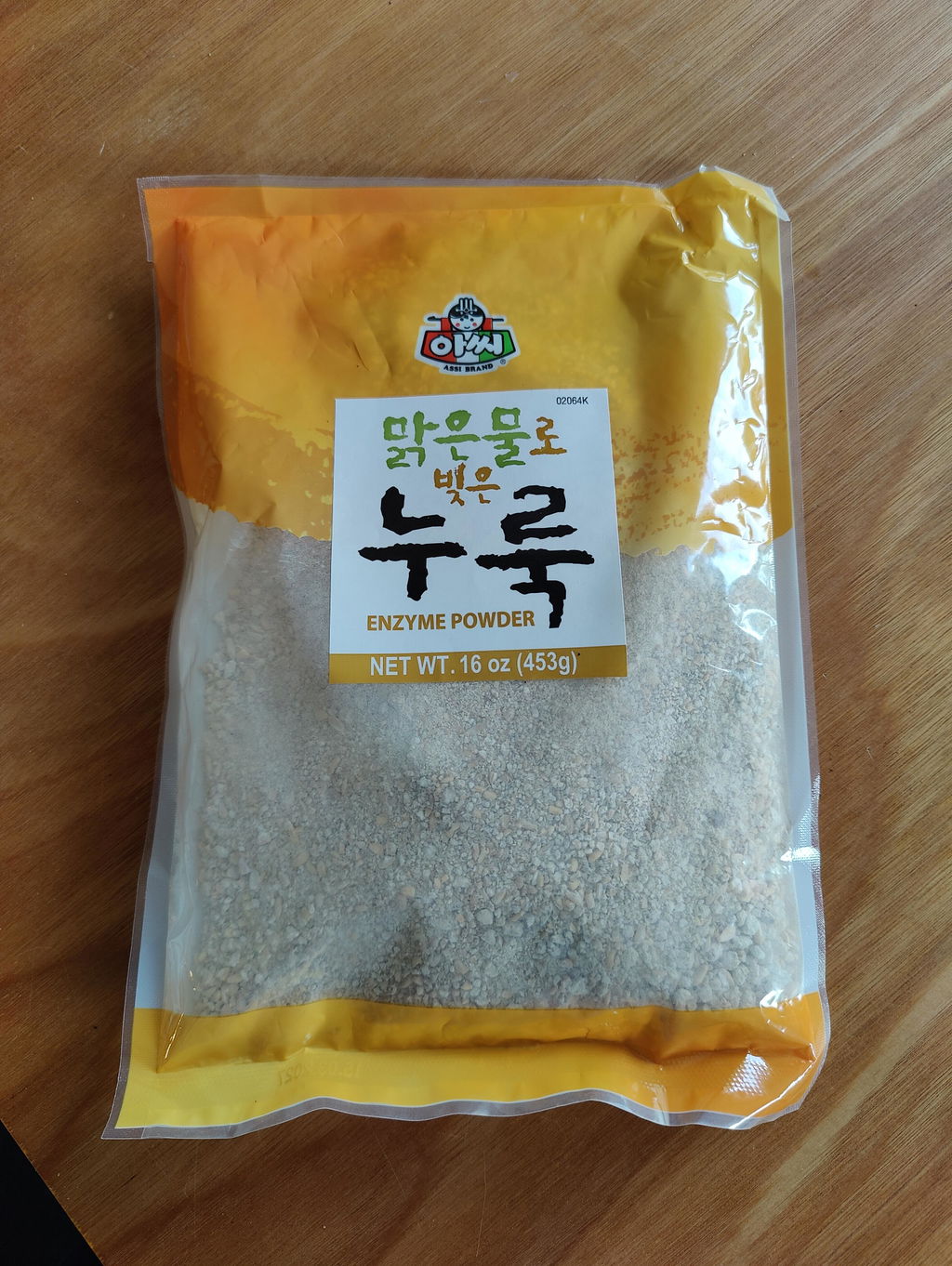
Assi Naturally Fermented Korean Nuruk Starter - Traditional Fermentation Culture 453g

Best Before
Only 1 left
OUT OF STOCK
Restock soon! PREORDER NOW
Hurry! LET BUY NOW

Only 1 left

€6.50
€5.90
- 9%

Frequently bought together

Customers also bought

Title

Assi Nuruk — Traditional Korean Fermentation Starter 453g

Authentic Korean Fermented Ingredient · 1,800 Years of Brewing Heritage

Nuruk is the traditional fermentation starter used in Korea to brew Makgeolli, Cheongju, and Soju. Made by kneading whole wheat into a round cake and allowing wild moulds and yeasts to naturally colonise it in a warm environment, Nuruk has been the foundation of Korean brewing culture for over 1,800 years — dating back to the Three Kingdoms period (3rd century AD). Think of it like a sourdough starter or wine yeast in European tradition — except Nuruk is a more complex multi-culture starter in which moulds, wild yeasts, and lactic acid bacteria all work together.

Fermented Fermented
Vegan Vegan
Dairy-Free Dairy-Free
Korea Korea
At a Glance · Highlights
Fermentation
Naturally Fermented Naturally Fermented
Vegan
100% Plant-Based Vegano · Vegan
Dairy-Free
No Dairy Ingredients Sin Lactosa · Dairy-Free
Origin
Imported Directly from Korea Direct from Korea

Product Information

Nutrition Facts (EU 1169/2011)
🔬 Nutrition table — to be updated following confirmation of official manufacturer data (compliant with EU Regulation 1169/2011). This product is a naturally fermented starter made solely from whole wheat and water; it is intended for use as a fermentation starter in brewing Makgeolli and Cheongju, not for direct consumption.
Ingredients · Ingredientes
Wheat · Water
No other additives. Whole wheat is kneaded with water and shaped into a round cake; during the natural fermentation process, wild airborne moulds (Aspergillus, Rhizopus), wild yeasts (Saccharomyces cerevisiae), and lactic acid bacteria naturally colonise the cake to create the fermentation starter. No artificial additives, preservatives, colourings, or MSG.
⚠️ Allergen Information · Información sobre alérgenos Gluten · Gluten
This product is made primarily from whole wheat and contains gluten. Persons with coeliac disease or gluten intolerance should avoid this product. Cross-contamination with other grain allergens within the production facility may be possible.

Flavour Profile · Tasting Notes

Aroma and flavour characteristics of Nuruk itself and the notes it develops during fermentation

Fermentation Starter Flavour Characteristics
Umami
7/10
Grain
9/10
Spice
0/10
Fermented
10/10
Sweet
4/10

Nuruk is not a food intended for direct consumption — it is a brewing fermentation starter. The profile above reflects the flavour contributions Nuruk makes during the fermentation process.

Traditional Korean Fermentation Method

Traditional Production Process
Nuruk is made by finely grinding whole wheat, kneading it with water, and pressing it firmly into a round cake shape. The shaped cake is then placed on straw or pine needles and left to naturally ferment in a warm, humid fermentation room for 2 to 4 weeks. In the traditional Korean method, this is followed by a further 1 to 3 months of fermentation and then 1 to 3 months of drying — a process similar to cultivating a natural sourdough starter, but requiring considerably longer maturation.

The Science of Fermentation
Over time, airborne micro-organisms naturally colonise the surface of the Nuruk cake — moulds (Aspergillus oryzae, Rhizopus), wild yeasts (Saccharomyces cerevisiae), and lactic acid bacteria all work in concert. The moulds break down the wheat starches into sugars, the yeasts convert those sugars into alcohol, and the lactic acid bacteria contribute deep sourness and complex flavour. This collaboration between three distinct microbial communities creates the layered, complex character unique to traditional Korean fermented beverages.

Comparison with European Fermentation Traditions
Just as a sourdough starter (levain) uses wild yeast to leaven bread in Europe, wine yeast transforms grape juice into wine, and sauerkraut ferments through lactic acid bacteria — Nuruk has performed the same role in Korea for 1,800 years. What sets Nuruk apart is that moulds, yeasts, and lactic acid bacteria all act simultaneously, making it a more multi-layered fermentation starter than any single European equivalent. It is one of the oldest brewing starters in the world, in continuous use since the Three Kingdoms period (3rd century AD).

Korean Brewing Traditions · Recetas Coreanas

A variety of traditional Korean beverages and foods made with Nuruk in Korean homes — experience the art of Korean home brewing for yourself.

Makgeolli
막걸리
Korea's most beloved traditional milky rice wine. Steamed rice is mixed with Nuruk and water and left to ferment for about a week, producing a gently sweet, lightly tangy, milky-white brew. With an alcohol content of around 6–8%, it is light and approachable. In Korea, Makgeolli is traditionally enjoyed on rainy days alongside Kimchi Jeon (kimchi pancake) or Pajeon (spring onion pancake).
Cheongju
청주
A clear Korean traditional rice wine produced by fermenting and maturing Makgeolli for longer, then filtering it until translucent. Similar to Japanese sake, but brewed with Nuruk, giving it a deeper flavour and a more pronounced grain aroma. In Korea, Cheongju is used in ancestral rites, at festivals, and at formal dining occasions — it is considered a premium brewed beverage.
Dongdongju
동동주
A traditional Korean rice wine in which grains of rice float on the surface during the early stages of Makgeolli fermentation. Sweeter and richer than Makgeolli, with the texture of the grain still present. Served in ceramic cups at traditional Korean taverns, it pairs beautifully with classic Korean snacks such as Bossam (boiled pork) or Jokbal (braised pig's trotters).
Soju (Traditional)
전통 소주
A traditional Korean distilled spirit made by distilling grain liquor fermented with Nuruk. Unlike the diluted commercial Soju widely available today, traditionally distilled Soju — such as Andong Soju or Munbaeju — is characterised by a deep grain aroma and a smooth finish. Home brewing takes time, but this represents the pinnacle of Korean brewing culture.
Gamju
감주 / 단술
A sweet, nearly alcohol-free traditional Korean fermented beverage made from Nuruk and rice. Similar to Sikhye (sweet rice punch) but fermented with Nuruk, giving it a deeper, more complex flavour. Enjoyed by all ages in Korea as a festive drink, it is best served chilled, when its natural sweetness truly shines.
Ihwaju
이화주
A celebrated traditional Korean rice wine passed down since the Goryeo Dynasty. Its name — Ihwaju (梨花酒), meaning "pear blossom wine" — comes from the tradition of brewing it when pear blossoms are in bloom. Made with Nuruk and glutinous rice, it has a thick, yoghurt-like consistency and can be eaten with a spoon. It is considered one of the finest expressions of Korean royal court brewing culture.

Product Details

Net Weight
453g
Origin
Republic of Korea · Korea 🇰🇷
Storage
Store in a cool, dry place away from direct sunlight. Once opened, seal tightly and refrigerate.
Manufacturer
Assi — Korean food brand
Intended Use
Fermentation starter for brewing Makgeolli, Cheongju, and traditional Korean rice wines. Not intended for direct consumption.

Nuruk — the root of 1,800 years of Korean brewing. dotAsia sources it directly from Korea and delivers it safely to homes across Europe.

Direct from Korea EU Delivery Traditional Fermentation Quality Guaranteed
Frequently Asked Questions (FAQ)
What is Nuruk? How is it used?

Nuruk is a fermentation starter used to produce traditional Korean fermented beverages. Made from wheat and water and naturally fermented, it is used to convert rice or other grains into alcoholic drinks (such as Makgeolli and Cheongju) or vinegar. Much like wine yeast or cheese starter cultures in European tradition, Nuruk has been the cornerstone of Korean fermentation culture for thousands of years. This product is not a ready-to-eat food — it is a brewing ingredient used at home to ferment beverages such as Makgeolli and Cheongju.

Is this product suitable for vegans or vegetarians?

Yes, Assi Nuruk is suitable for both vegans and vegetarians. The ingredients consist solely of wheat and water, with no animal-derived ingredients included.

Can this product be used by people with a gluten allergy?

No. This product is manufactured using whole wheat as its primary ingredient and therefore contains gluten. Under EU food labelling law (Regulation 1169/2011), gluten is a mandatory declared allergen. Persons with coeliac disease or a wheat allergy should not use this product.

What does Makgeolli brewed with Nuruk taste like? How does it compare to European drinks?

Makgeolli fermented with Nuruk is gently sweet and lightly tangy, with a soft effervescence and a deep, characteristic grain flavour. The alcohol content is typically around 6–8%, making it light and easy to drink. In European terms, it sits somewhere between a German Weizenbier (wheat beer) and a French cidre (fermented apple drink), while the natural depth that develops during fermentation is also reminiscent of natural wine.

How should this product be stored, and what is its shelf life?

Store Assi Nuruk away from direct sunlight in a cool, dry place. Once opened, it is recommended to transfer it to an airtight container and refrigerate. As a dried fermentation starter, Nuruk may deteriorate in quality if exposed to moisture. Always check the best-before date printed on the product packaging.

New Arrivals

2+1

Buy 2 Get 1 Free

Buy 2, get 1 free

Assi Naturally Fermented Korean Nuruk Starter - Traditional Fermentation Culture 453g

€5.90
€6.50