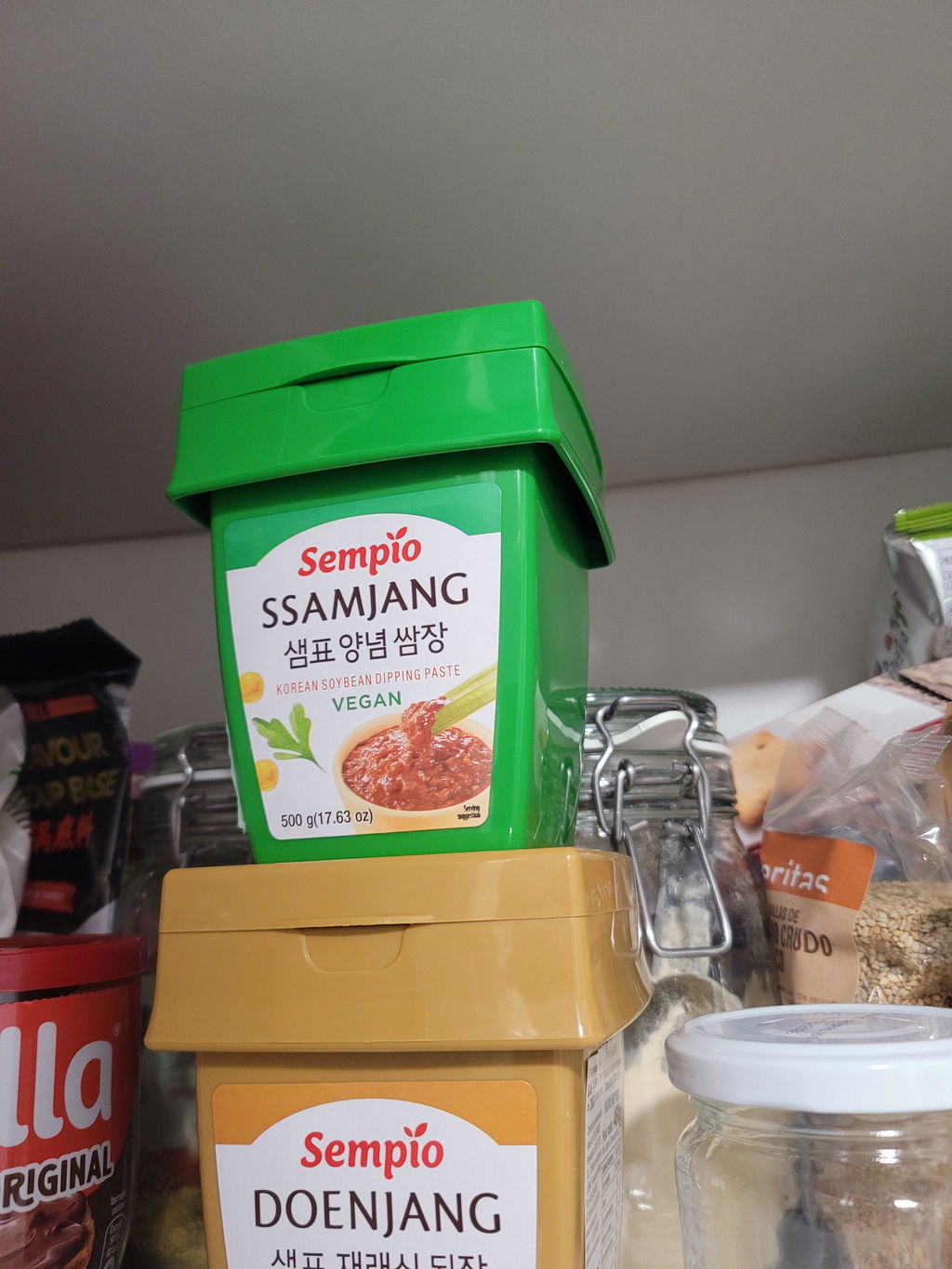
The two key components of Ssamjang — Doenjang (fermented soybean paste) and Gochujang (fermented red pepper paste) — are cornerstones of Korean fermented food culture. Doenjang is made by mashing cooked soybeans into meju blocks, then submerging them in brine to naturally ferment for months or even years. Gochujang is prepared by combining red pepper powder, glutinous rice, meju powder, and salt, then slowly maturing the mixture in a warm environment. Sempio Seasoned Ssamjang blends these two fermented pastes in a golden ratio and adds garlic, sesame, ginger, and starch syrup to create a ready-to-use all-purpose Korean condiment.
The fermentation process uses Koji starter culture — a naturally occurring fermentation strain grown on grains that breaks down proteins into amino acids, generating deep umami flavour. In Korea, soybeans have been slowly transformed through the changing temperatures of all four seasons for hundreds of years, building complexity and depth in the paste over time.
Just as cheese in Europe develops its character through moulds and enzymes, wine gains depth through yeast, and sauerkraut is shaped by lactic acid bacteria over time — Korean fermented pastes (jang, 醬) are equally the result of microorganisms and time working together. What may seem unfamiliar at first is, in fact, a flavour rooted in the same tradition of fermentation that Europeans have long cherished.