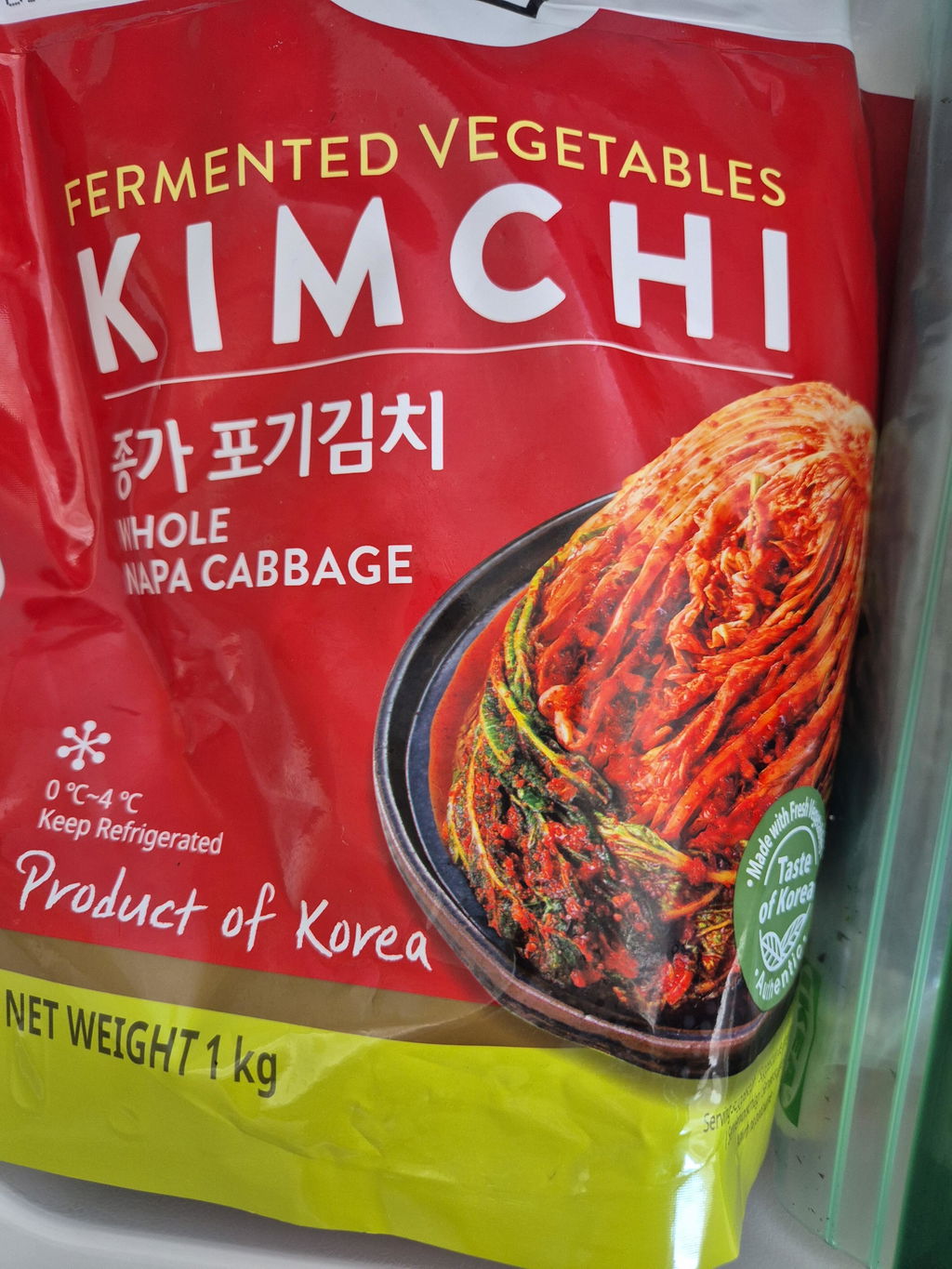
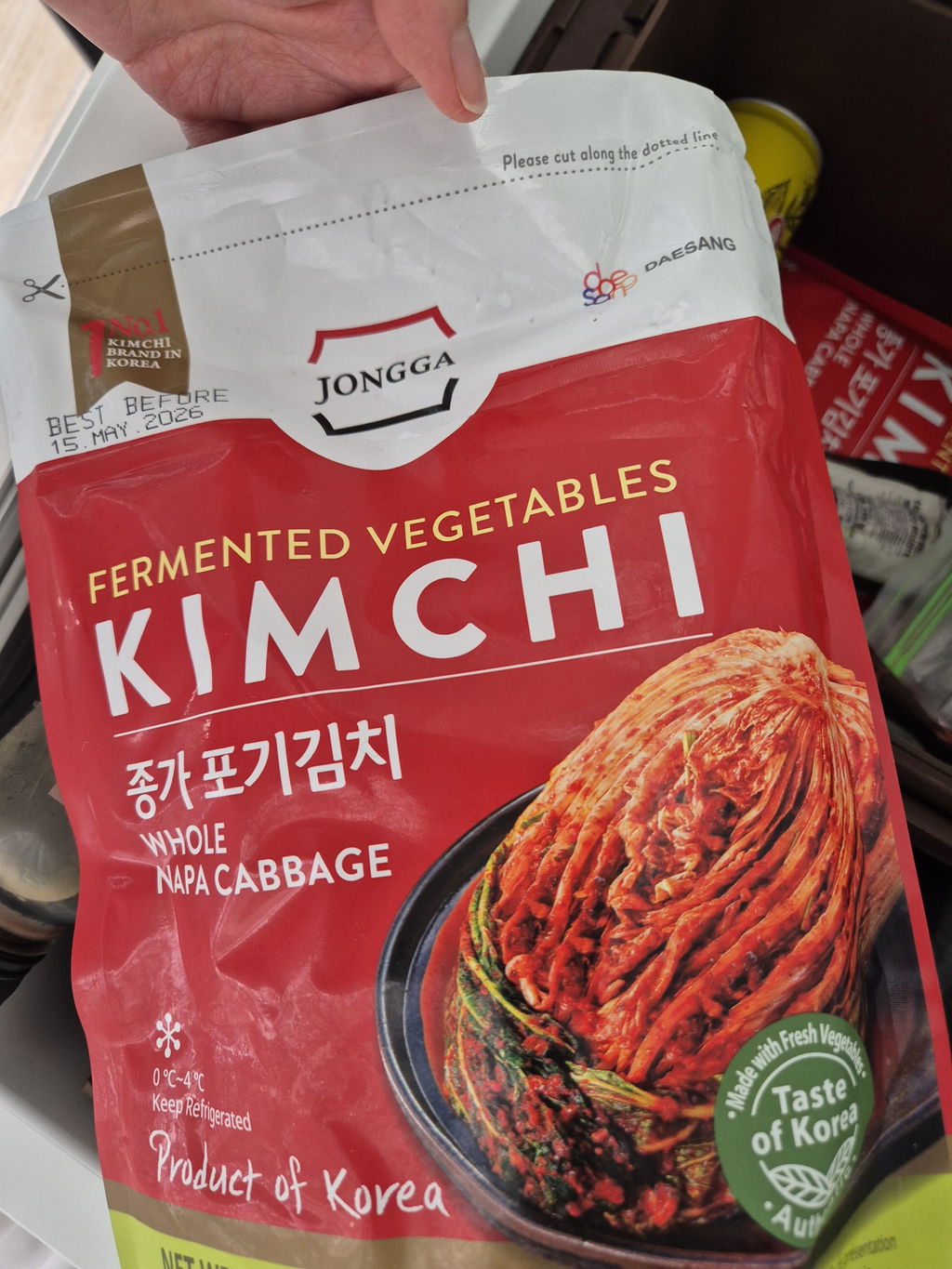
Jongga Naturally Fermented Whole Cabbage Kimchi - Pogi Kimchi 1kg (Refrigerated)

Best Before
Only 70 left
OUT OF STOCK
Restock soon! PREORDER NOW
Hurry! LET BUY NOW

Only 70 left

€16.00
€14.95
- 7%
Title

Jongga Pogi Kimchi 1kg · Refrigerated

Authentic Korean Fermented Food · Naturally Fermented

Pogi Kimchi is Korea's most beloved naturally fermented food. Whole napa cabbage is salted and layered with a traditional blend of Korean red pepper flakes, garlic, ginger, and anchovy fish sauce, then left to ferment naturally. Just as cheese and wine develop complexity over time, Kimchi gains its deep umami and refreshing acidity through natural lactic acid fermentation. It is an essential side dish on the Korean table, appearing at nearly every meal and serving as the cornerstone of Korean cuisine.

Fermented Fermented
Gluten-Free Gluten-Free
Dairy-Free Dairy-Free
Alcohol-Free Alcohol-Free
Korea Korea
At a Glance · Highlights
Fermentation
Naturally Fermented Naturally Fermented
Gluten-Free
No Gluten Ingredients Sin Gluten · Gluten-Free
Dairy-Free
No Dairy Ingredients Sin Lactosa · Dairy-Free
Alcohol-Free
No Alcohol Sin Alcohol · Alcohol-Free
Low-Fat
Low-Fat Food Bajo en Grasa · Low-Fat
Origin
Imported Directly from Korea Direct from Korea

Product Information

Nutrition Facts (EU 1169/2011)
Nutrient Per 100g Total (1000g)
Energy 40 kcal / 167 kJ 400 kcal / 1670 kJ
Fat 0.8 g 8 g
- Saturated Fat 0 g 0 g
Carbohydrate 6 g 60 g
- Sugars 3 g 30 g
Protein 2 g 20 g
Salt 1.58 g 15.8 g
Ingredients
Salted napa cabbage 68.1% [napa cabbage (Korean origin), salt (Korean origin)], radish (Korean origin), Jongga anchovy fish sauce (Korean origin), Jongga shrimp fish sauce (Korean origin), Jongga mild kelp base [kelp (Korean origin)], red pepper powder (Korean origin), garlic (Korean origin), ginger (Korean origin), green onion (Korean origin), onion (Korean origin), chives [or mustard leaf] (Korean origin), Leuconostoc DRC0211 / DRC0212 (kimchi lactic acid bacteria), Lactopiprime (lactic acid bacteria), Jongga kimchi paste [gelatinized rice mixed powder (rice: Korean origin)], refined salt (Korean origin).
⚠️ Allergen Information Crustaceans (shrimp) Fish (anchovy) Sesame (possible cross-contact during production)

Flavour Profile · Tasting Notes

Like wine or cheese, Kimchi is a flavour shaped by time
Umami
9/10
Fresh
7.5/10
Spice
6/10
Fermented
8/10
Salt
5.5/10

Traditional Korean Fermentation

Pogi Kimchi begins by halving napa cabbage and salting it with coarse sea salt. Once the cabbage is properly brined, a seasoning paste — made from shredded radish, red pepper flakes, garlic, ginger, green onion, onion, anchovy fish sauce, and shrimp fish sauce — is carefully spread between each leaf by hand. Jongga is one of Korea's most trusted Kimchi brands, faithfully following this traditional method at its production facility in Korea.

After seasoning, the cabbage undergoes a natural fermentation process at low temperature. During this stage, Leuconostoc-strain lactic acid bacteria become active, slowly converting the natural sugars in the vegetables into lactic acid. Over time, a refreshing acidity and deep umami develop, while the individual seasoning ingredients meld together to create Kimchi's distinctively complex flavour. The duration of fermentation varies naturally with the season and ambient temperature.

Kimchi belongs to the same category as well-known European fermented foods — sauerkraut, aged cheese, wine, and naturally leavened bread. What sets it apart is the way it combines the freshness of vegetables, the depth of its seasoning, and the tang of natural fermentation all at once. It is a uniquely Korean culinary tradition, appearing on the table at almost every meal as the most familiar and beloved side dish in Korean cuisine.

How Koreans Enjoy It · Korean Serving Ideas

Here are the six most popular ways Korean households enjoy Jongga Pogi Kimchi. Experience the authentic flavours of Korean cuisine exactly as they are.

Banchan
반찬
The most fundamental way to enjoy Kimchi on the Korean table. Simply take out a portion of Kimchi, slice it into bite-sized pieces, and serve it alongside a bowl of steamed white rice and soup. No cooking required — this is how an authentic Korean home meal comes together.
Kimchi-jjigae
김치찌개
One of the most beloved Korean stew dishes. Simmer well-fermented Kimchi together with pork or canned tuna to create a rich, spicy broth — Kimchi-jjigae. The deeper the acidity of the Kimchi, the more robust and flavourful the stew becomes.
Kimchi-bokkeumbap
김치볶음밥
Finely chop Kimchi and stir-fry it with cooked rice in a hot pan, then top with a fried egg cooked sunny-side up. This is a classic Korean one-bowl home meal. Older, more fermented Kimchi delivers a deeper umami, and a drizzle of sesame oil at the end brings the flavours to life.
Samgyeopsal Pairing
삼겹살 곁들임
Kimchi pairs perfectly with Korean-style grilled pork belly (Samgyeopsal). Wrap a slice of grilled pork together with Kimchi and garlic in a lettuce leaf and eat it in one bite. The acidity of the Kimchi cuts through the richness of the meat beautifully.
Kimchi-jeon
김치전
A Korean-style savoury pancake made by mixing finely chopped Kimchi into a flour batter and pan-frying until golden. The result is crispy on the outside and tender on the inside. In Korea, Kimchi-jeon is a beloved snack on rainy days and a classic pairing with Makgeolli (Korean rice wine).
Ramyeon Topping
라면 토핑
Add a generous handful of Kimchi to Korean instant Ramyeon while it cooks, or serve it on the side. The result transforms an ordinary bowl of noodles into something far more complex. The acidity of the Kimchi brightens the broth, making this one of the most popular late-night combinations in Korea.

Product Details

Net Weight
1 kg
Origin
Republic of Korea 🇰🇷
Storage
Keep refrigerated (0–10°C). Once opened, reseal tightly and store in the refrigerator. Consume as soon as possible after opening.
Manufacturer
Jongga · Daesang Corp., Korea
Product Type
Pogi Kimchi (Whole Cabbage Kimchi) · Naturally Fermented · Refrigerated

Jongga is one of Korea's most trusted and beloved Kimchi brands. dotAsia imports directly from Korea and delivers fresh to customers across Europe.

HACCP Certified Direct EU Delivery Authentic Korean Recipe Cold Chain Storage Quality Guaranteed
Frequently Asked Questions (FAQ)
What is Pogi Kimchi and what does it taste like?

Pogi Kimchi is one of Korea's most iconic traditional fermented foods. Whole napa cabbage is salted and then layered with a seasoning paste of red pepper flakes, garlic, ginger, and fermented fish sauce, before being left to ferment and mature. "Pogi" means "whole head" in Korean. The flavour is spicy, savoury, and tangy all at once, with a complex fermented character. Much like cheese or wine, the longer it ferments, the deeper and more nuanced its umami becomes. It can be enjoyed on its own as a side dish (Banchan), or used as an ingredient in dishes such as Kimchi-jjigae (Kimchi stew) and Kimchi-bokkeumbap (Kimchi fried rice).

Is this product suitable for vegans or vegetarians?

No, this product is not suitable for vegans or vegetarians. Jongga Pogi Kimchi contains anchovy fish sauce (fermented anchovy sauce) and shrimp fish sauce (fermented shrimp sauce), both of which are animal-derived ingredients. Both vegetarians and vegans should therefore avoid consuming this product.

I have allergies — is this product safe for me? What allergens does it contain?

This product contains allergens that must be declared under EU Regulation 1169/2011. Specifically, it contains crustaceans (shrimp fish sauce), fish (anchovy fish sauce), and sesame (possible cross-contact during production). If you have an allergy to any of these ingredients, please do not consume this product. Gluten (wheat, barley, rye, etc.) is not present, so those following a gluten-free diet can consume this product with confidence. However, if you have a severe food allergy, please read the full ingredient list carefully before consuming.

How is Kimchi fermented? What makes it a fermented food?

Kimchi is a traditional food made through natural fermentation, in the same category as European cheese, wine, or naturally leavened bread. After the salted cabbage is mixed with the seasoning paste, it is left to mature at low temperature for a period of time. During this process, lactic acid bacteria naturally present in the cabbage and seasoning become active and drive the fermentation. This is what creates Kimchi's characteristic tangy acidity and deep umami. Jongga Pogi Kimchi is produced using this traditional Korean fermentation method. As a fermented product, the acidity will naturally increase over time — this is entirely normal.

How should I store this product, and how long will it keep?

Jongga Pogi Kimchi 1kg is a refrigerated product and must be stored in the refrigerator at 0–10°C at all times. Before opening, follow the best-before date printed on the packaging. After opening, transfer to an airtight container, keep refrigerated, and consume as soon as possible. Freezing is possible, but the texture may change slightly after thawing. As a fermented product, fermentation continues slowly even in the refrigerator, so the sourness will gradually increase over time. Kimchi that has become more sour is ideal for use in cooked dishes such as Kimchi-jjigae or Kimchi-bokkeumbap, where its deeper flavour truly shines.

Customers also bought

New Arrivals

2+1

Buy 2 Get 1 Free

Buy 2, get 1 free

Jongga Naturally Fermented Whole Cabbage Kimchi - Pogi Kimchi 1kg (Refrigerated)

€14.95
€16.00