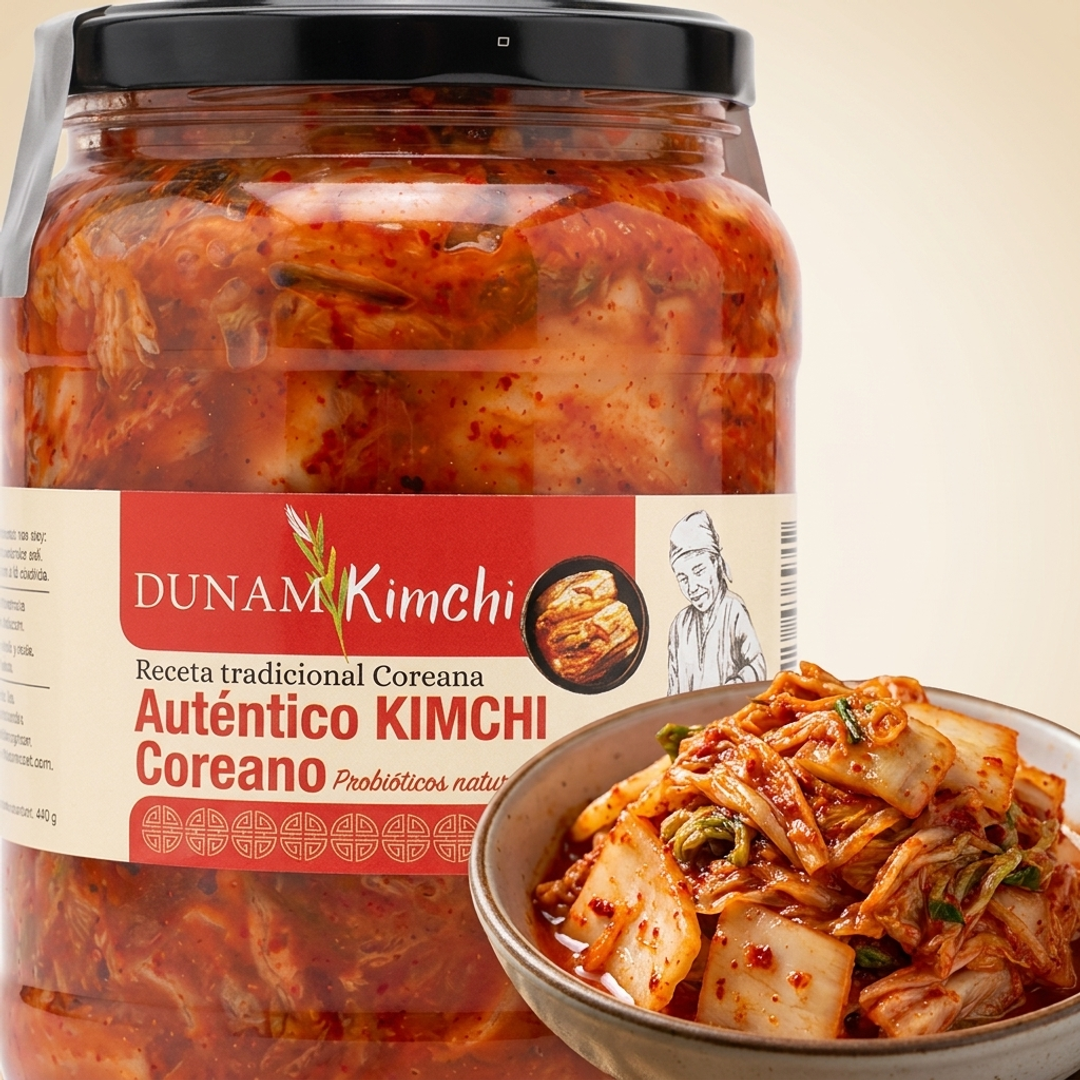
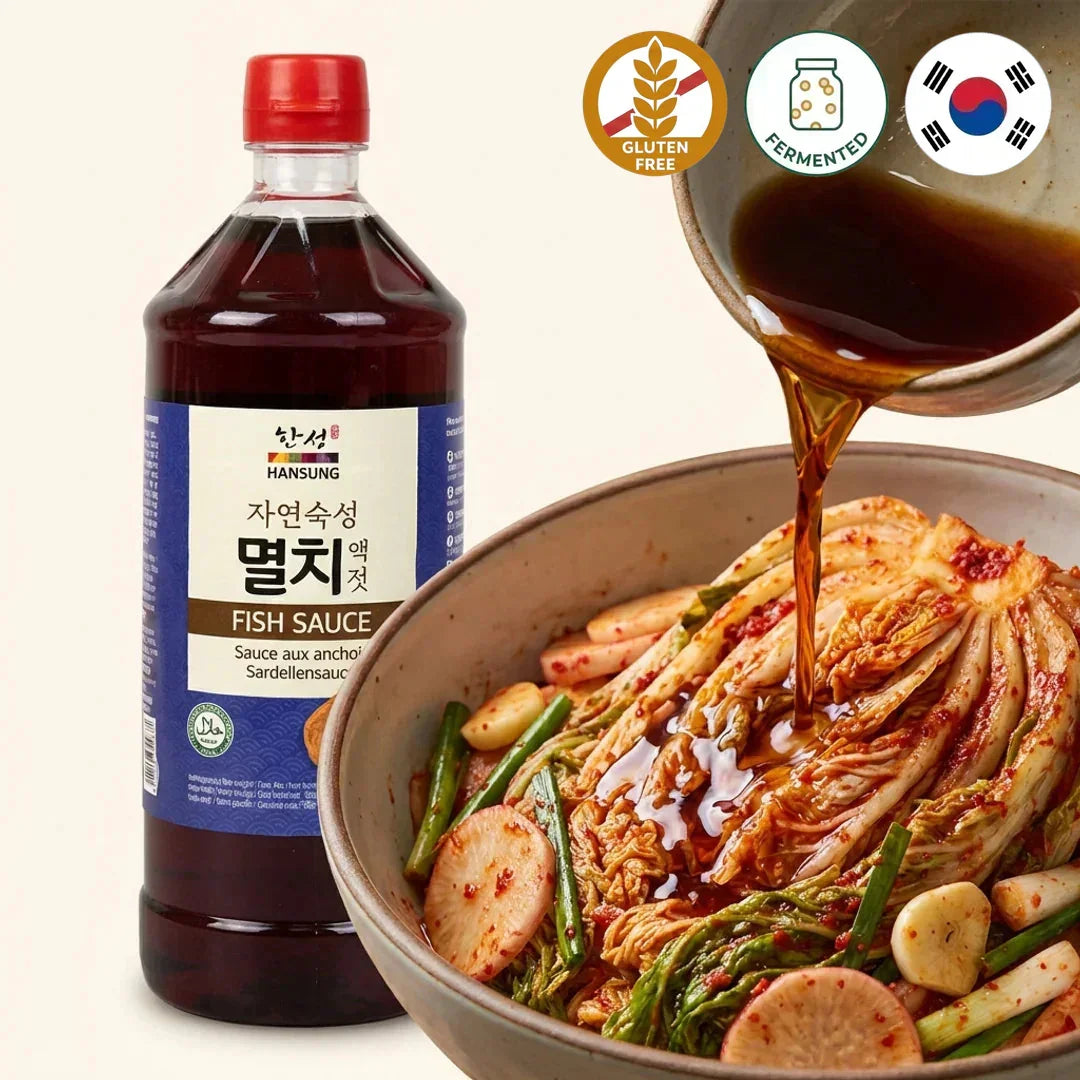
Chonggak Kimchi is one of Korea's oldest side dish traditions, made using small, plump altari radishes harvested in autumn — leaves and all. The cleaned radishes are first salted in sea salt to draw out moisture, then generously coated with a seasoning blend of gochugaru (red pepper flakes), minced garlic, ginger, green onion, anchovy fish sauce, and shrimp sauce. In Korean households, this process is called "making kimchi," and each family carries its own seasoning ratios — much like a cherished handwritten recipe passed down through European families.
Freshly made kimchi begins as a crisp, lightly seasoned vegetable dish, but slowly transforms over time. Lactic acid bacteria naturally present in the seasoning — this product also contains Leuconostoc DRC0211 — gradually convert the natural sugars in the radish into organic acids, turning the fresh sweetness of the vegetable into a deep, complex umami. Kept at refrigerator temperature (0–4°C), fermentation proceeds slowly, with the flavour deepening over days and weeks.
In European culinary terms, kimchi fermentation is closest to sauerkraut (German fermented cabbage), but with a far richer seasoning profile. Just as cheese develops deeper aroma through ageing, or wine gains complexity in an oak barrel — kimchi too is completed only with the ingredient of time. First enjoyed as a fresh, spicy radish kimchi, and then days later as a "matured" kimchi with a bright tang and deep umami — this transformation itself is one of the great pleasures of kimchi.